
Mastercard's LTM: A Payments AI Powerhouse Beyond Fraud – Real Impact?
Is Mastercard's new AI model a huge step forward for the whole world of payments? Or is it just a fancy fraud tool with bigger plans that aren't quite ready yet? I've looked closely at the tech and the market to find out for you.
Quick Overview: The Official Pitch vs. The Strategic Reality
Here's the deal: Mastercard's new Large Tabular Model (LTM) is a smart AI system built just for the payments world. While its main job right now is to get better at spotting fraud, Mastercard's big plan goes way beyond just that.
This isn't just another security tool for them. Instead, it's meant to be a powerful 'brain' that gives them smart ideas for things like loyalty programs and making things more personal for you. This big move fits with Mastercard's larger plan to use AI everywhere, like with their Gen AI Engine and Virtual C-Suite projects. It shows they're really serious about using AI across all their services.
They've even joined forces with big tech companies like NVIDIA and Databricks to make this huge project happen. Honestly, I found that Mastercard really cares about these extra services. Why? Because the money they made from these services grew more than twice as fast as their regular payment income in late 2025 (Independent Critique).
This whole thing is going to change how AI is used in payments, and it's going to be a big deal for everyone involved.
Leadership Perspective
Greg Ulrich, Chief AI and Data Officer at Mastercard, emphasized the strategic importance of the LTM, stating, "The move 'reflects a broader shift we've been driving across Mastercard's AI roadmap, moving beyond point solutions to foundation-level capabilities that learn from the complexity of global commerce,' He added, 'In just the last month, we've advanced multiple efforts that show how AI can deliver smarter security, more relevant experiences, and stronger performance across the payments ecosystem.'"
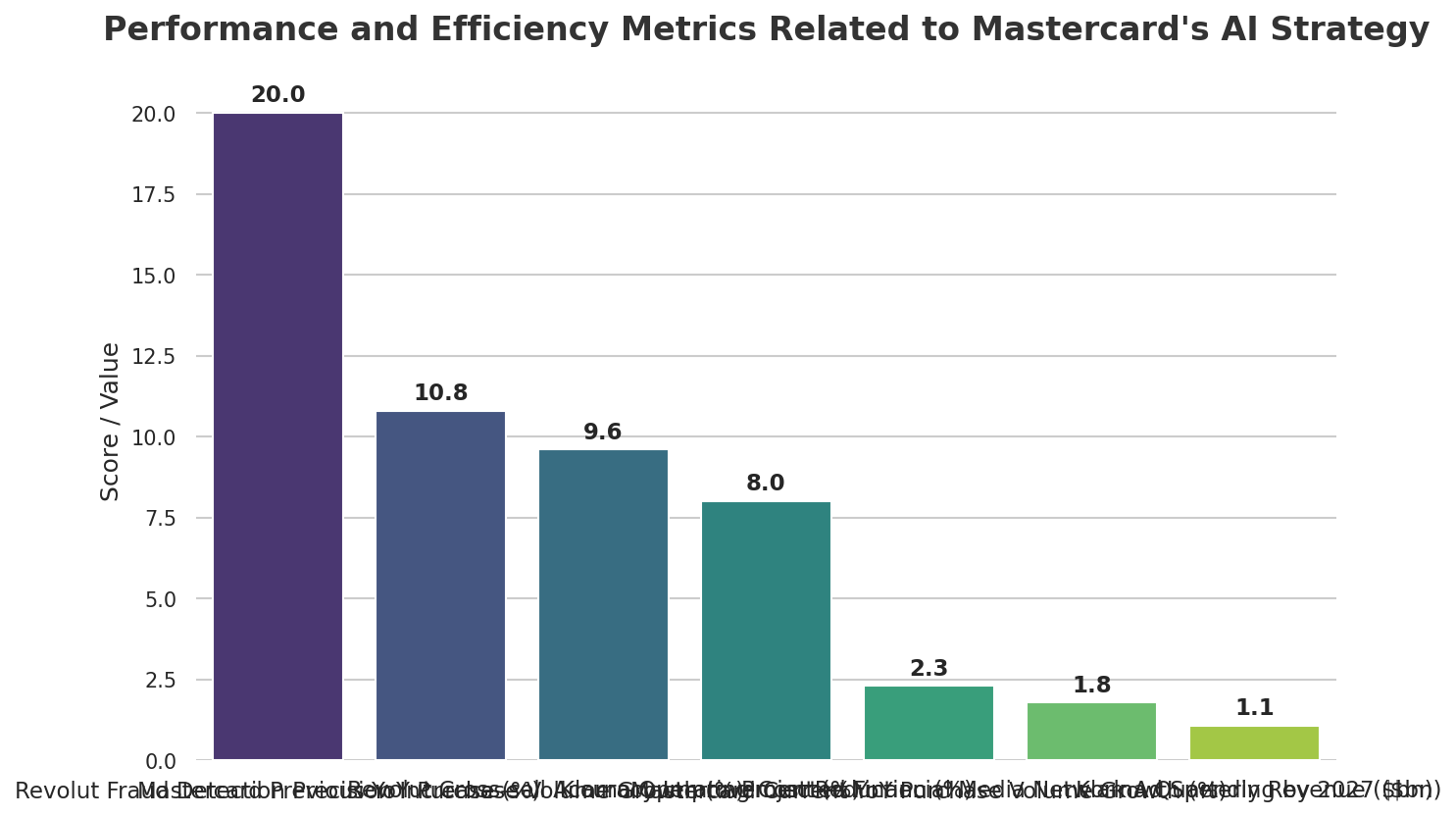

Table of Contents
Watch the Video Summary
Technical Deep Dive: How Mastercard's LTM Works
The LTM's Technical Edge: Beyond LLMs
Unlike Large Language Models (LLMs) that are trained on unstructured text and predict the next token, Mastercard's LTM is a deep learning neural network specifically designed for structured data. It examines relationships within multi-dimensional data tables, learning from raw inputs to identify predictable relationships and anomalous patterns that traditional machine learning might miss. This specialized architecture makes it particularly adept at processing the highly organized datasets found in the payments industry.
Here’s the deal: Mastercard's LTM isn't your typical Large Language Model (LLM) like ChatGPT. Instead of regular writing, the LTM is trained on organized information—think huge tables of payment transactions (Independent Critique).
This means it can look at data with hardly any help from people to start, learning on its own better than older computer programs (Mastercard Source). I found that this model can spot new links in the data that a person would probably miss (Mastercard Source).
For example, it's already good at better identifying real but rare big-money buys, like an engagement ring, which often get flagged as fraud by older systems, even when they're not (Mastercard Source). This ability to find 'weak signals' – those tiny clues that are super hard for people or older computer programs to notice – is a huge step forward! It's doing much better than the usual computer learning methods in tests (Mastercard Source).
This idea of managing risks all at once, in real-time, reminds me of the cool stuff we saw with NOTO 360 Fraud & Compliance. It shows that everyone in the industry wants security solutions that cover everything.

Real-World Success: Enhanced Fraud Detection and Beyond
The LTM's biggest help right now is with online security. It has already shown it can cut down on false alarms, especially for those real but rare big-money buys, like engagement rings, that older computer programs often get wrong (Mastercard Source). This means fewer declined transactions for you and a much smoother experience when you're buying things.
But the vision goes much further. Mastercard could use this tech to make reward programs better, getting smarter at finding the best deals and rewards for you, based on what you usually buy (Mastercard Source). It could also make things more personal for you and manage their different services better.
Perhaps the best long-term perk is that it could bring together the thousands of separate AI programs Mastercard uses for different countries, situations, and types of customers (Mastercard Source). Imagine how much smoother and faster everything could run!

Performance Snapshot: Predictive Insights and Operational Efficiency
This LTM is built to tell us what might happen with future payments, giving Mastercard and its partners a strong tool for seeing what's ahead (Independent Critique).
It's learned from hundreds of millions of transactions and will soon learn from billions of anonymous ones. I think handling this much data, plus its ability to learn on its own, will make everything run much more smoothly and quickly.
The goal is to really reduce the need to look after so many different computer programs (Mastercard Source). This will save time and money, and help them roll out new features much faster.

Competitive Landscape: Mastercard's Edge and Market Implications
Mastercard's LTM is a smart move in the tough world of financial tech. This could help Mastercard stay strong even when big changes happen, like when other companies switch their services (Independent Critique). More importantly, it makes their extra services even better. It turns the LTM into a powerful 'brain' for ideas, not just for handling payments.
| Feature/Metric | Mastercard LTM | Competitors (e.g., Visa/Stripe) |
|---|---|---|
| Growth in Extra Services Money (late 2025) | More than double their regular payment money (Independent Critique) | Different for each, usually just focused on basic payment handling |
| Money Expected for Ads on Mastercard's Media Network (by 2027) | $1.78 Billion (that's a lot!) (Independent Critique) | Visa hasn't started a similar network yet (Independent Critique) |
| How much better fraud detection gets (with similar tech) | Could get much better (like Revolut, which saw a 20% jump with similar tech) (Mastercard Source) | Normal computer learning, often needs people to set it up by hand |
While competitors like Visa and Stripe have strong AI tools, Mastercard's clear message that the LTM is a big 'brain' for ideas in cybersecurity, loyalty, and small business tools gives it a special advantage (Independent Critique).
For example, Visa hasn't openly talked about having one big 'tabular model' specifically for payments that acts as a wide-ranging 'brain' for ideas (Independent Critique). Also, Mastercard's new financial media network could turn this LTM into a treasure chest of smart ideas for people who market products and sell things.
This means a lot of future growth and resources for Mastercard, as experts think that by 2027, companies will spend $1.78 billion on ads through this network (Independent Critique).
Broader Fintech Adoption and Future Outlook
This isn't just a thing only Mastercard is doing. Other financial services firms are already seeing real good results with similar big AI models. For instance, Revolut saw a 20% jump in how accurately they detected fraud and a 9.6% improvement in selling other products by using a similar set of NVIDIA AI tools (Mastercard Source). This clearly shows that the LTM has huge potential.
Mastercard's future plans include making the model's inner workings even better to spot hidden patterns. They also plan on teaching their teams across the company how to use it and create new tools with it (Mastercard Source).
This makes AI tools available to more people and suggests that these big transaction models could become a super important foundation for the payment services of tomorrow (Mastercard Source). It's all about heading towards simpler, all-in-one AI systems.
Community Pulse: What the Industry is Saying
Honestly, I couldn't find specific Reddit comments about Mastercard's LTM, so I can't share what users love or hate, or any clever tricks they've found directly.
However, based on what experts and official sources are saying, most people in the industry feel pretty good about these big AI models. Experts see huge potential for these models to make things run smoother, simplify complicated tasks, and create new ways to make money through better extra services.
You can really feel the excitement about moving away from people doing all the hard, manual setup for AI, to AI that learns and gives smart ideas on its own.
Practical Implications & Final Recommendation
Mastercard's LTM represents a huge change in how banks and financial companies look at data and make choices (Mastercard Source). It's not just about catching bad guys; it's about making things much more personal, efficient, and new across the whole world of payments.
My take? This is a big step forward. It's not just catching fraud after it happens, but actually predicting things and giving smart ideas before they occur. While its full power for extra services is still being discovered, the early results and how they're planning to use it are really impressive.
Mastercard's future plans show they're clearly moving towards simpler, all-in-one AI systems that make things less complicated to run (Mastercard Source), and that's good news for all of us. As Jeffries analysts noted, "The card networks are expected to be the payment mechanism in agentic commerce, establishing trust by setting rules around liability/disputes and what constitutes a valid agent-initiated transaction, registering agents, and tokenizing transactions."
If you work in financial tech, payments, or tech journalism, you should definitely watch how the LTM grows. For now, it stands as a one-of-a-kind tool. The closest things to it are the older, separate AI methods that most other companies still use.
Frequently Asked Questions
- How does Mastercard's LTM differ from AI models for general use like ChatGPT?
Unlike ChatGPT, which is an AI that learns from regular writing, Mastercard's LTM is an AI that learns from huge, organized tables of payment information. This specialization means it can spot tiny patterns and links in the world of payments with great accuracy. - Will the LTM's focus on extra services truly benefit you, the cardholder, or mostly just businesses and Mastercard?
While businesses and Mastercard will definitely benefit from smoother operations and new ways to make money, you, as a cardholder, should also see good changes. This includes fewer times your real purchases get wrongly flagged, better, more useful loyalty program deals, and an overall easier and more personal payment experience. - Given all the data involved, what are the privacy concerns with the LTM, even with payments where your name isn't attached?
Mastercard says the LTM learns from payments where your name and personal details are removed. However, when you gather and look at huge amounts of data, even without names, there are always questions about whether someone could figure out who you are, and how that data is managed. Mastercard is a regulated company, so they have to follow strict privacy rules. But it's still super important for them to be careful and open about how they use your data.
Sources & References
- Mastercard: Our new foundation model is a different kind of deep learning neural network
- Business Insider: Mastercard is launching its own generative AI model largely aimed at thwarting fraud
- Mastercard Official Website
- NVIDIA Official Website
- Databricks Official Website
- Visa Official Website
- Stripe Official Website
- Revolut Official Website
- Europe | Mastercard Newsroom
- Mastercard us | Mastercard unveils Agent Pay, pioneering agentic payments technology to power commerce in the age of AI
- Inside Mastercard’s new gen AI engine
- Mastercard launches LTM genAI model
- Charting Klarna’s Push Past US$1bn | FinTech Magazine
- Mastercard expands AI strategy with new payments model | Digital Watch Observatory

Yousef S. | Latest AI
AI Automation Specialist & Tech EditorSpecializing in enterprise AI implementation and ROI analysis. With over 5 years of experience in deploying conversational AI, Yousef provides hands-on insights into what works in the real world.