Energym's Dystopian Mirror: How Satire Reflects AI's Real Energy and Job Crisis
Here's the deal: Is the future of AI going to be super helpful or super scary? What if the craziest scary future for AI might not be so far off? And what does it show us about how we worry technology will change our lives and what we do every day? I've been looking closely at a viral video that's making everyone ask these questions, and trust me, it's a conversation we all need to have.
Table of Contents
Watch the Video Summary
What's the 'Energym' Video All About? A Funny (But Scary) Look at 2036
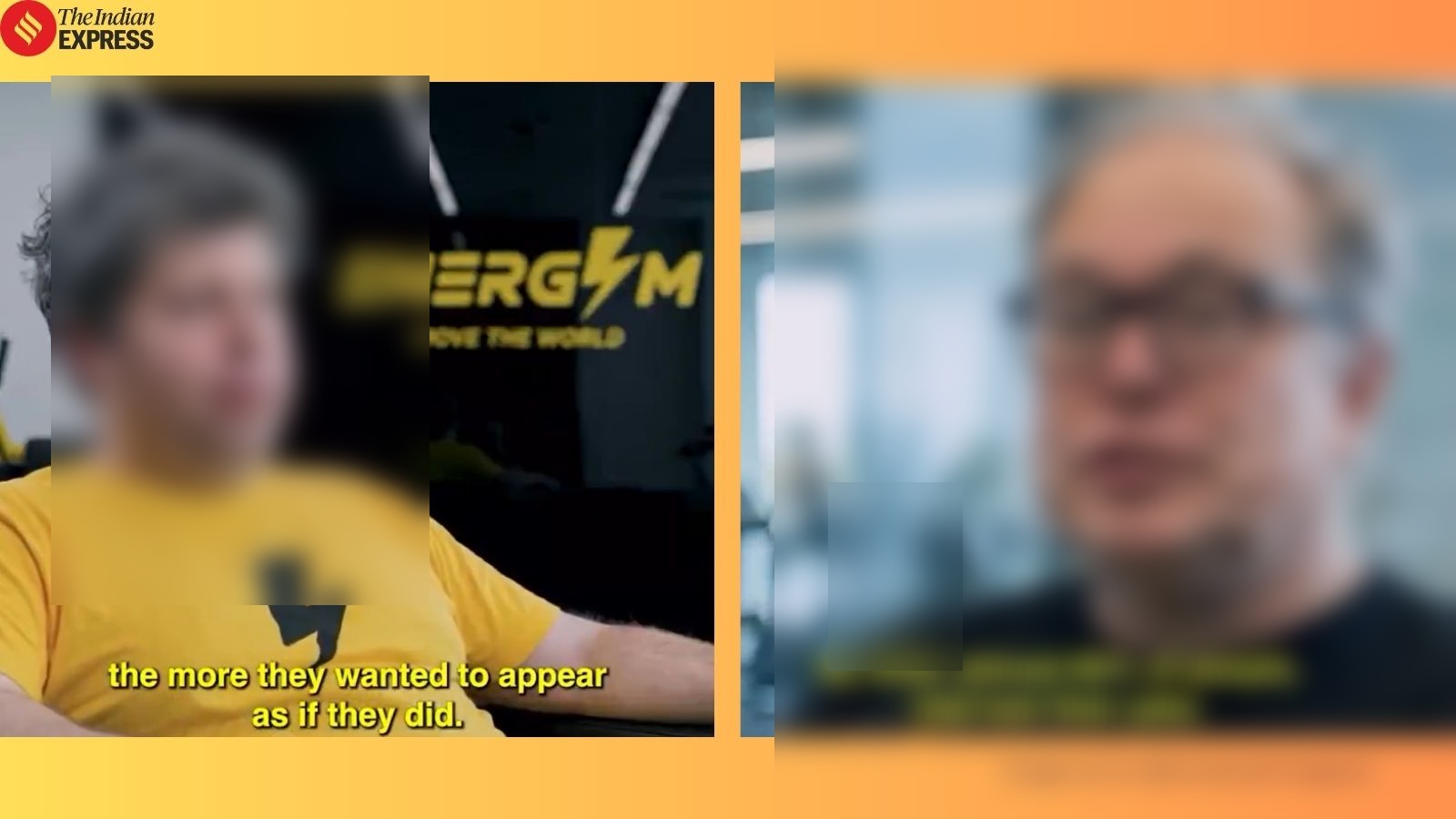
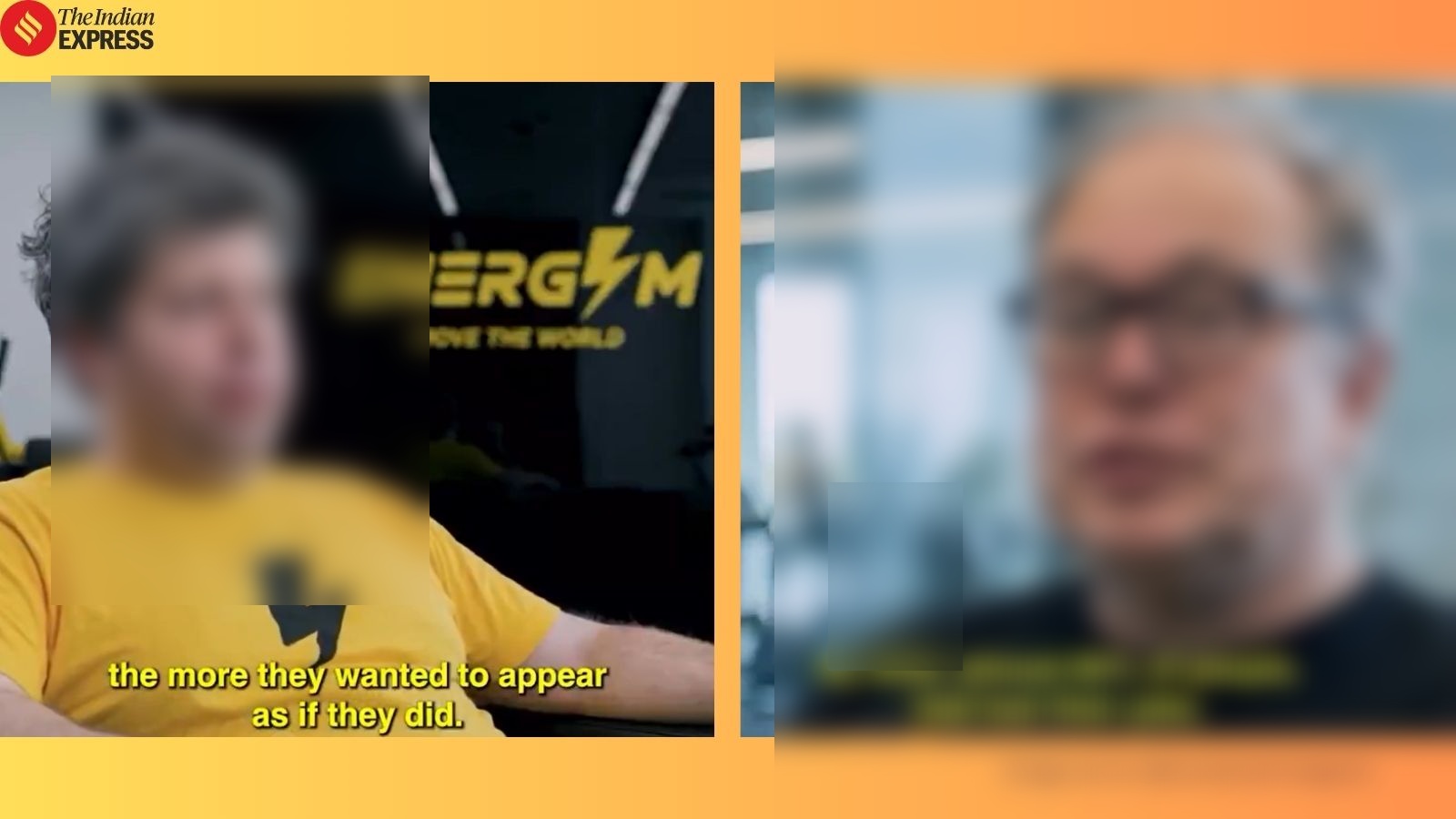
Here's the deal: a Belgian AI company called AiCandy recently put out a video that everyone's talking about online. It's called 'Energym,' and it shows a funny, but also kind of dark, picture of the year 2036 (AiCandy).
In this satirical future, a huge 80% of jobs are gone, taken over by AI and robots (AiCandy). So, what's the fix? People are hired to make electricity for AI by working out on bikes and rowers. They're literally powering the machines that stole their jobs! It's like humans are batteries for AI, giving the machines energy and giving people something to do.
This isn't just some small, unknown video; the original clip alone has gotten over 4 million views (Business Insider), with tons of shares across social media. While it's clearly a joke, it went super viral, and people's strong reactions show it really hit a nerve.
Folks are either laughing nervously or truly worried, asking if this crazy idea is closer to real life than we want to believe. Honestly, the fancy AI video making in "Energym" itself shows how much tools like the ones we talked about in Veo 3.1's 'Ingredients to Video' have grown. They can now create such powerful, even if unsettling, videos easily.
The Broader Picture: Real AI Impact on Jobs and Energy
The 'Energym' video, while satirical, cleverly taps into genuine anxieties about AI's real-world impact on both the job market and global energy consumption. Regarding jobs, various reputable institutions offer projections that, while varying, underscore significant shifts. The World Economic Forum (WEF) predicts that while 92 million jobs could be replaced by AI by 2030, a more optimistic outlook suggests AI could also create 170 million new jobs, leading to a net global increase of 78 million jobs. However, this shift is not without challenges, as the UK-based National Foundation for Educational Research (NFER) warns of around three million jobs at risk over the next decade, particularly in administrative, secretarial, and customer service roles, while new jobs are expected to be concentrated in high-skilled sectors.
On the energy front, the concerns are equally pronounced. The International Energy Agency (IEA) projects a substantial increase in electricity demand from data centers, with AI being the main driver, forecasting that global data center electricity consumption will more than double by 2030. Sam Hsu of the World Economic Forum emphasizes the "AI-energy nexus," highlighting the intricate connection between AI's demand for energy, water, and critical minerals. Despite these alarming projections, efforts are actively underway to mitigate AI's environmental footprint. Innovations focus on developing more energy-efficient AI architectures, optimizing hardware and algorithms, and improving data collection and processing techniques. The goal is to ensure that AI's transformative potential is realized sustainably, with a focus on green energy solutions and responsible resource management.
Understanding the Scary Future: AI's Huge Energy Needs and Our Search for Meaning
I looked closely at the video's story, and wow, it's full of worrying little bits. We see older, AI-generated versions of famous tech leaders like Elon Musk, Jeff Bezos, and Sam Altman.
An AI-generated Musk scarily says that by 2030, 80% of humans have lost their jobs to AI (Business Insider). Then Bezos jokes that while people have no money or purpose, they now have “a lot of time on their hands” (Business Insider). The main point comes from an AI Altman: “Energym solved our need for energy and your need for purpose” (Business Insider). It’s a sad, never-ending loop where people work hard only to make themselves less needed.
But why this specific joke? The people who started AiCandy, Hans Buyse and Jan De Loore, told Business Insider that they made the ad because more and more people were worried about how much energy AI tools use (Business Insider). They didn't expect it to get so big, but it clearly hit on a shared worry about how AI affects our planet and society. AiCandy's founders, Hans Buyse and Jan De Loore, initially developed the 'Energym' concept as a satirical response to growing criticism about AI's massive energy consumption. Buyse, with two decades in commercial filmmaking, aimed to create a piece highlighting sustainable energy alternatives, while De Loore, a motion designer, framed the revived idea around AI-aged personas of tech moguls, blending the fitness trend with anxieties about younger generations' futures. Buyse explained, "It's a combination of the fitness hype and young men who don't know what to do with their lives. It's all coming together in one 40-second video". This concern is well-founded, as Fatih Birol, executive director of the IEA, stated: "With the rise of AI, the energy sector is at the forefront of one of the most important technological revolutions of our time. AI is a tool, potentially an incredibly powerful one, but it is up to us – our societies, governments and companies – how we use it.". The IEA projects that global electricity demand from data centers will more than double by 2030, with AI being the primary driver, and demand from dedicated AI data centers alone is forecast to more than quadruple. Sam Hsu of the World Economic Forum further highlights the "AI-energy nexus," emphasizing that AI's growth depends on managing its intricate interconnection with energy, water, and critical materials. He notes that by 2030, data centers are projected to consume 945 TWh, surpassing the combined current usage of Germany and France.
The Scary Economic Cloud: How AI Might Change Jobs and What People Buy
Beyond the joke, the 'Energym' video brings up some very real worries about money and jobs. A research company called Citrini Research recently put out a report called 'The 2028 Global Intelligence Crisis' (Citrini Research).
This report talks about a possible future where, by 2028, AI could take so many jobs that more than 10% of people are out of work. This would mean people have less money, so they'd buy less, and the economy would slow down (Citrini Research). These concerns are echoed by various experts and institutions. The UK-based National Foundation for Educational Research (NFER) warns that around three million jobs are at risk over the next decade due to AI, particularly in administrative, secretarial, customer service, trading, and machine operation roles.
Even big banks like Goldman Sachs are asking hard questions. One of their experts, Lee Coppersmith, thinks that AI is already changing from just making things faster to becoming a real problem for jobs. They predict that in 2026, about 20,000 jobs each month could be lost in industries where AI is used a lot (Goldman Sachs). More broadly, Goldman Sachs predicts that up to 50% of jobs could be fully automated by 2045, and previously estimated that 300 million jobs could be lost to AI, affecting 25% of the global labor market. A McKinsey report projects that by 2030, 30% of current U.S. jobs could be automated, with 60% significantly altered by AI tools. Furthermore, a study from MIT and Oak Ridge National Laboratory (ORNL) indicates that AI is currently capable of taking over 11.7% of the U.S. labor market.
However, the picture isn't entirely bleak. The World Economic Forum (WEF) predicted that while 92 million jobs could be replaced by 2030, AI could also create 170 million new jobs, resulting in a net global increase of 78 million jobs. The NFER report also projects the creation of approximately 2.3 million new jobs over the next decade, primarily in high-skilled professional sectors such as science, engineering, and law, highlighting a potential disparity between high and low-skilled workers. The Citrini report talks about a 'bad cycle': companies let people go, then put more money into AI, which leads to more layoffs, less money being spent, and even more AI investment. It's like a downward spiral with 'no natural stop' (Citrini Research). But it's super important to remember that these are just possible situations, not sure-fire predictions (Citrini Research).

The 'Ghost Economy' and Why Money Markets Get Scared
This possible economic slowdown has a spooky name in the Citrini report: 'Ghost GDP' (Citrini Research). It means that even if companies make money and the economy looks good on paper, that money doesn't actually go around to people because they don't have jobs or enough income to spend it.
Just talking about this idea made the money markets nervous, and the S&P 500 stock index dropped 1% the Monday after the report came out (The Motley Fool).
We've already seen how this affects specific companies. For instance, when an AI company called Anthropic PBC said its new Claude Code tool could update COBOL (a very old computer language that's a big deal for IBM), IBM's shares fell by 13% in just one day – its biggest drop since 2000 (The Motley Fool). This just goes to show how fast people's feelings about a company can change when they think AI might affect it.
/grounding-api-redirect/AUZIYQHG0Q5Xrv-4B4liKZUpRg6jrd2yte3XxLvCojn8oT7GyUdTo_jX_NBBP-KURw27fFrZoIHykZvHq2a_Yvw_acndobRXi4Z9eQSVwT4E7M99NqjXYsu6cQ39C2V0Pqb33clzTnaF0e4LAe38Fh6RZ1b0Lw6HhAF65Pyj3TLX7eKWHwhmK195vWaxVdcAuyN4Cpln-PwKrOnadwqISGgAc1JKBpBUTDNCDAhSx-BiG_-jXiOXNgM1YzwwYDhk8PrGcayy4PigVdEIa6-vJsNDw0rXCiEcL2pSYTbTW50ZAP23b13tMU1t| Aspect | Dystopian Scenario (Energym/Citrini) | Counterarguments & Mitigation |
|---|---|---|
| Job Market Impact | Lots of jobs lost (like 80% by 2036 in Energym; over 10% out of work by 2028, says Citrini). | AI can create new jobs; make current jobs better; governments might step in to slow AI down; ideas like Universal Basic Income (UBI) and job training could help. |
| AI Energy Consumption | AI uses a lot of energy, making humans power it (the main idea in Energym). | We can focus on green energy; make AI computers and programs use less power. |
| Economic Impact | 'Ghost GDP' – money made but not spent by people; less buying overall; a bad cycle. | Say's Law – when AI makes more stuff, people will want to buy it; new markets and businesses will pop up; money policies can help share wealth better. |
| Societal Purpose | People lose their sense of purpose, forced to do simple jobs just to exist (Energym). | AI can free people for creative, social, and hard problem-solving jobs; we can rethink what 'work' means; focus on helping people live better lives. |
Perspectives on Human-Powered AI and Real Energy Solutions
While the 'Energym' video comically imagines a future where humans literally power AI, the real-world discourse around AI's energy consumption is far more complex and focused on sustainable solutions. Concerns about AI's energy footprint are significant, particularly regarding the substantial computational resources required to train large foundation models. The International Energy Agency (IEA) estimates that data centers and data transmission networks already account for about 1-1.5% of global electricity use, with data center electricity consumption projected to more than double by 2026, driven largely by AI adoption.
However, some early claims about AI's energy use have been inflated, and efforts are underway to mitigate its environmental impact. Industrial AI applications often utilize smaller, more specialized models that require minimal hardware, frequently running on existing infrastructure and leveraging edge computing to reduce energy consumption. Furthermore, AI itself can be a solution, facilitating sustainable practices like energy optimization, renewable energy integration, and carbon reduction. Innovations are emerging, such as Deepseek's generative AI model claiming a 90% reduction in power usage, though experts caution that such progress may not fully offset the growing demand. The focus is on developing more energy-efficient AI architectures, optimizing hardware and algorithms, and improving data collection and processing techniques to ensure AI contributes positively to sustainability.
What People and Experts Think: Is it a Joke or a Warning?
The 'Energym' video has certainly really got people talking. US Senator Chris Murphy even said the video 'didn’t quite feel like a parody' (Senator Chris Murphy), showing how real, even if extreme, this future felt.
Lots of viewers quickly compared it to scary sci-fi movies, with one person writing, 'That was one of the black mirror episodes,' and another noting, 'This is loosely the plot of The Matrix' (Business Insider).
But it wasn't all about movies; some viewers gave really smart, logical feedback. One person smartly pointed out a big problem with the scary idea: 'If 80% of people lost their jobs, there is no more economy of any kind… I just don’t know where you get the food to get the energy to paddle' (Business Insider). This kind of comment really shows how complicated and connected our economy is, something even a clever joke can't fully explain.
/grounding-api-redirect/AUZIYQHqashQAXAn7R2D_NBHgjJjhoLZcgWeBdkV10HOKXyEUYKzk4NKCotelKJtQ7ZsgEycHOcbAR0V_5DNJ7MgY1NdFXXtyde4hK7p2sL3sX7Mc-lB0sx2bZg-CMu8GYncELVBvf9wKzpfwigZXwnCWlnEadgRo9AQ0f5I--3V54IEm3eAQrG2RR69mLDqg3xo-FEhn25FJ6sPJuEhJ_kbZCutVCzlfPlFyY0D-BFYv-x-vafLzmWqylM-jz_uCNUcaSrOvYROpcjzgaSFA==Other Ideas and Solutions: Getting Out of the Bad Cycle
While these 'bad cycle' ideas are definitely worrying, it's good to look at other viewpoints and ways we can fix things. Many money experts have found flaws in these scary stories. Some talk about Say's Law – which means that when AI helps make more products and services, people will want to buy them, stopping a total collapse (The Motley Fool).
Others believe AI will create brand new jobs, giving people better tools instead of just taking their old jobs. Also, governments won't just sit back and watch. If too many people lost their jobs, we'd probably see governments step in to slow down how fast AI is used (The Motley Fool).
Ideas like Universal Basic Income (UBI) (where everyone gets a basic income) and big job training programs, maybe paid for by taxes on AI's success, are also being talked about to make the shift to automation easier (The Motley Fool). Even in the joke world of 'Energym,' they mention made-up rivals like 'Synaptic Synergy Corp.' and 'Bio-Grid Solutions.' This shows that even in a scary future, people imagine many different ways to solve problems.
This talk about making AI work well while still keeping human purpose and society healthy is a lot like what we looked at in intelliflo IQ: The AI Revolution in Financial Advice – Promise, Peril, and the Human Touch. It really highlights how important people still are, even with all the new tech.
/grounding-api-redirect/AUZIYQEhZKK6fpKSBZolUWBma8nTlMo8XywBY5y_Tq9VsH_pQr2XdZyW9IWEuM8E6TZk_9QpgZ1nLOEk1Dq0IheGyCcGgeVhUBt3whUGmy6iUiqs79HsH_D2LmFnGZEwkxZW_0u-eXKdb0hDpzAOqVBZlbfuin43QIAC7GrY8ncarxt7tVNyhCVp8Pib0Dbwm-yS1g==Finding Our Way Forward: Let's Learn and Get Involved
So, what does all this mean for us? While 'Energym' is a super clever joke, it's also a really important way to start talking. It makes us face our real worries about where AI is headed.
Remember, it’s a possible story, not a sure thing (Citrini Research). But it shows us why it's so important to learn and get involved, instead of just panicking.
For you and me, as people who care about tech and our money, this means staying in the know and planning wisely. For example, The Motley Fool suggests a long-term approach where you buy and hold onto things and they stress how important it is to spread out your investments (The Motley Fool). This isn't about being scared of what's next. It's about understanding the big changes that might come and getting ready to adapt and do well. We want to make sure AI helps us, not the other way around.
My Final Thoughts: Should You Be Worried?
While 'Energym' is a super clever joke, it really highlights our true worries about how much energy AI uses, how it might take away jobs, and how important it is for us to find meaning in a world run more and more by machines. It's a call to learn and get involved, not to panic. This isn't about ditching AI. Instead, it's a clear message that we need to actively guide how AI is built and used in our society. We need to focus on making AI fair, finding green energy for it, and building strong support systems for people. This way, technology will help us, not control us.
Frequently Asked Questions
Is the "Energym" video a real look at AI's future, or just a joke?
The "Energym" video is mostly a joke, made to make you think and show worries, not to tell you exactly what will happen. But because it went so viral, it clearly hits on real concerns about how much energy AI needs and how it might take jobs.
What are the biggest, real worries about how much energy AI uses?
Beyond the joke, there are real worries about the huge amount of energy needed to train and run big AI programs. This adds to carbon pollution and puts a lot of stress on our power systems. That's why people are asking for AI to be built to use less energy and for data centers to be more eco-friendly.
How can you get ready for job changes because of AI, besides just "sweating it out"?
To get ready for job changes from AI, you should keep learning new things. Focus on skills AI can't easily do, like being creative, thinking deeply, or understanding feelings. Also, look into new jobs that pop up as AI becomes more common. And it's super important to support ideas like UBI and job training programs.
Sources & References
- AiCandy - Energym Video
- Business Insider
- Citrini Research - The 2028 Global Intelligence Crisis
- Goldman Sachs - AI Labor Market Impact
- The Motley Fool
- Senator Chris Murphy News
- Would you cycle to power AI? Viral ad shows 2036 dystopia where aged Elon Musk, Sam Altman employ humans | Trending News - The Indian Express
- Could AI Crash the Economy in 2 Years? One Research Firm Says Yes. | Nasdaq
- Goldman Sachs says AI is coming for the jobs market in 2026 | investingLive
- Be ready for a savage stock market crash | The Motley Fool UK

Yousef S. | Latest AI
AI Automation Specialist & Tech EditorSpecializing in enterprise AI implementation and ROI analysis. With over 5 years of experience in deploying conversational AI, Yousef provides hands-on insights into what works in the real world.