
intelliflo IQ: The AI Revolution in Financial Advice – Promise, Peril, and the Human Touch
intelliflo IQ: The AI Revolution in Financial Advice – Promise, Peril, and the Human Touch
So, intelliflo IQ is here, promising to cut down on boring paperwork by a huge 85%. This makes financial advisors ask themselves: will this new AI really let them spend more time with you, their clients? Or will it make it harder to keep that personal, trusting connection that's so important?
I've looked into all the official news, how it actually works, and what others in the industry are saying. My goal is to give you the complete story.
Table of Contents
- intelliflo IQ: The AI Revolution in Financial Advice – Promise, Peril, and the Human Touch
- Performance & "Real World" Benchmarks
- intelliflo IQ Unveiled: The Official Pitch for AI-Driven Efficiency
- Under the Hood: How intelliflo IQ's AI Transforms Client Engagement
- Early Wins: Advisor Testimonials and the Promise of Productivity
- The intelliflo Vision: Connecting Every Stage of Financial Advice
- Beyond the Hype: The Broader AI Landscape, Risks, and the Human Element
- The Hybrid Model: Balancing AI's Power with Human Insight
- Practical Implications for Advisors: Navigating the AI Frontier
- Community Pulse: What Real Users Are Saying
- My Final Verdict: Should You Use It?
Watch the Video Summary
intelliflo IQ: The AI Revolution in Financial Advice – Promise, Peril, and the Human Touch
intelliflo IQ is a big step forward in using AI for financial advice. It's all about making things super-fast and easy for advisors.
The company says it's a bunch of smart AI tools built right into their current intelliflo office system. The main idea? To make things run smoothly, cut down on all that extra paperwork, and ultimately, let advisors focus on what they're great at: helping you with your money.
Performance & "Real World" Benchmarks
When we talk about AI in money matters, the numbers really start to show us something important. intelliflo IQ is making some big promises about how efficient it can be.
So, I think it's worth checking out how these promises turn into real benefits for advisors. My look at it shows they're really focused on cutting down paperwork time and getting all your information in one place.
| What it measures | intelliflo IQ (What they say) | Normal Way (Manual) | What it means |
|---|---|---|---|
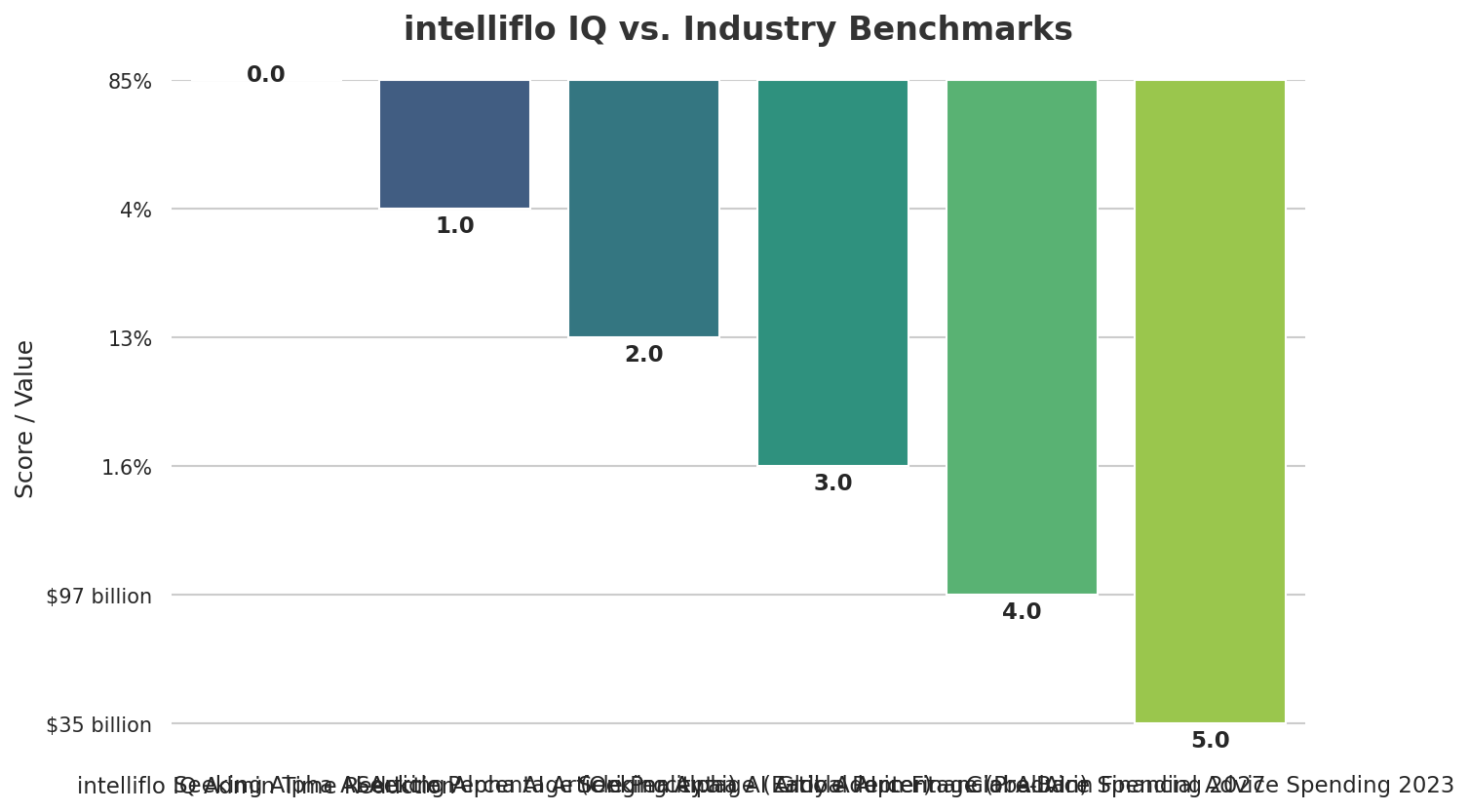
| Time saved on paperwork | Up to 85% (intelliflo Press Release) | ~40-60% of advisor time | Huge time saver! |
| Client info fields updated | Over 190 (intelliflo Press Release) | Done by hand, varies | Gets all the details |
| Money spent on AI (2023-2027) | N/A | $35B to $97B (Industry Projection) | Shows a huge change in the industry |
Honestly, the potential for cutting down on paperwork is a big deal. Imagine, updating over 190 client information fields automatically? That's a game-changer for making sure all your information is correct and complete.
While the money spent on AI isn't directly about intelliflo IQ, it really highlights a huge trend in the industry that intelliflo is part of. It shows that people really want these kinds of smart solutions.
intelliflo IQ Unveiled: The Official Pitch for AI-Driven Efficiency
intelliflo has officially launched intelliflo IQ. It's a new set of smart AI tools built right into their intelliflo office platform.
They worked with an AI partner called Multiply to build this. Why? Because lots of advisors (43%!) are already using AI and want more.
The main part you can use right now is called the 'intelligent engagement assistant'. This tool uses AI to grab, check, and understand client information from all sorts of places – like your scribbled notes, voice recordings, or PDFs.
Specifically, the intelligent engagement assistant is powered by advanced imaging and audio AI. It reviews and replays client discussions to create precise, compliant records. After adviser review and approval, it seamlessly converts handwritten notes, audio files, and PDFs into structured updates for over 190 fields within the fact-find, enabling the instant production of high-quality, personalised client documents, emails, and letters.
Then, it automatically updates intelliflo office, including over 190 client details. The big promise? You could cut down on paperwork by up to 85% and create official documents instantly.
Looking ahead, intelliflo has also hinted at another tool, the 'intelligent advice assistant', which should launch later in 2026. This future tool will use a smart advice system to spot what clients need and suggest just the right solutions for them.
The intelligent advice assistant, scheduled for launch later in 2026, will incorporate an advanced algorithmic advice engine. This engine is designed to proactively identify material changes in clients' circumstances or goals, provide a financial health check, and suggest tailored solutions and planning opportunities based on suitable advice guidelines.
Under the Hood: How intelliflo IQ's AI Transforms Client Engagement
So, how does intelliflo IQ actually do all these amazing things? Well, it runs on what intelliflo calls 'super smart picture and sound AI'.
This clever tech can turn all sorts of information – like your handwritten notes, voice recordings, and PDFs – into organized, useful data. Think of it like having a super-efficient digital assistant that can read, listen, and understand your client chats, then instantly organize everything.
Because of this, the system can create correct, official records and personalized documents for clients in just seconds. Generally, AI in managing money uses smart learning programs to look at old financial information, guess future spending, and give advice that's just right for you.
We're talking about fancy prediction tools, like Random Forest and ARIMA models. These help make better choices and keep an eye on your money faster.
/grounding-api-redirect/AUZIYQFs_CqZ6zIeLDI1krEHmnxVH9GhfAYLv6NPjeKc5bDldYWSE42C0Vx8rbVlLq574TiEHY3KSlpRbRcJ2IByAtADoBf9lwdNfTexowToz7NJoIrgGg-rSkte0B_Cmrw65ub115BRfcXDbWTxePgGtbtSDya7-m6ZLMB_12QgQu9MfcClvXRM5TdbV3tbXwLqbq5Real-World Impact: Voices from Early Adopters
It's always good to hear from the people actually using the tech, right? Well, the first folks to try intelliflo IQ have been pretty excited about what it can do.
For example, James Hancher, an expert at Titan Wealth, said he was "highly impressed by its potential to enhance the efficiency of our advice teams across the country." He loved how it could record client meetings perfectly, update client details, and make notes after meetings in just minutes.
Honestly, another expert, Tom Wilson from MAC Financial Limited, mentioned, "It is streets ahead of other AI tools we’ve looked at, and we’re excited to see the efficiencies it brings for our advisers and clients alike."
This kind of feedback backs up what intelliflo's CEO, Nick Eatock, believes: that it will "cut down on manual work, give firms more room to grow, and help them get better results for their clients."

The intelliflo Vision: Connecting Every Stage of Financial Advice
intelliflo IQ isn't just a one-off gadget. It's a big part of intelliflo's bigger plan to link up every step of financial advice, from your first chat to putting plans into action, all with smart, data-powered tech.
This means creating a smooth system where AI helps advisors every step of the way with clients, making sure everything is consistent and works well.
The goal is to stop having messy, broken steps and instead create a smooth flow of information and advice. By bringing AI into client chats right from the start, intelliflo wants to set things up for smarter, more 'ahead-of-the-game' advice later on.
The best part? It makes the whole experience better for you, the client.

Beyond the Hype: The Broader AI Landscape, Risks, and the Human Element
While the promises of AI are exciting, it's important to look past the excitement and think about the bigger picture, including what could go wrong. My look into AI for financial advice shows a few common worries.
These include the lack of personalized human empathy, big privacy concerns and data security issues, and the fact that it totally relies on getting really good information to start with. Also, there are more and more legal rules and checks needed, as laws are trying to catch up with how fast AI is changing.
Honestly, experts at Harvard Business School, looking at sites like Seeking Alpha, have a really interesting point about what they call the "bot view" concern. The worry is that "eventually, everyone's advice will start to sound the same – like a robot's advice."
This means that AI, sometimes, "gives worse information to people looking to grow their resources" compared to different ideas from real people. This makes us wonder how original and deep AI-made content really is. This concern about everyone having the same ideas is a big concern, just like AI might make all advice sound the same, as we talked about in GPTadvisor's AI-Powered Wealth Management: Analyzing the Next Chapter of Financial Innovation.
On the data privacy front, intelliflo's own cookie policy gives us a peek into how much data companies often collect. They mention using cookies that help them understand how their website is used, and they share this info with other companies.
Also, other cookies track you across different websites to build a profile for ads you might like. This info can be shared with advertisers. This just shows how important it is for you to know how your personal information is used when you deal with AI tools.

The Hybrid Model: Balancing AI's Power with Human Insight
Given the risks we just talked about, many in the industry are pushing for a 'hybrid model'. This means mixing smart tech with the unique skills of human advisors – skills you just can't replace.
The idea is that AI tools like intelliflo IQ should support human advisors, not replace them. This lets advisors let AI handle the boring, data-heavy stuff. This frees them up to do the really important things, like giving you personalized advice during big life changes or offering that caring support only a person can.
Honestly, the money world is really going all-in on this idea. Experts think that worldwide, spending on AI in financial companies will jump from a huge $35 billion in 2023 to an even bigger $97 billion by 2027.
This huge investment shows that people strongly believe AI can make human advice better, not take away from it.
Practical Implications for Advisors: Navigating the AI Frontier
For financial advisors, new tools like intelliflo IQ bring both huge chances and important things to think about. On one hand, the good things about AI are really good: it saves money, can work 24/7 on some tasks, processes data fairly, and can grow with your needs.
These benefits can really help an advisor do more and reach more people.
But wait, there's a catch. Advisors must also really know the downsides. The lack of human empathy, possible privacy problems, the fact that it totally depends on getting really good information, and the constantly changing rules and regulations are not small things to ignore.
The truth is, how well any AI tool works, including intelliflo IQ, depends completely on how good the information it uses is. You know the saying, "Garbage in, garbage out"? That applies more than ever here.
Ultimately, the most successful advisors will be those who learn how to use AI's smart analysis while still keeping and highlighting what makes human advice so special: trust, understanding, and guidance just for you. It's about using AI to make the human connection even better, not get rid of it.

Community Pulse: What Real Users Are Saying
While I usually check out online communities like Reddit to see what real people think, there isn't much talk about intelliflo IQ on Reddit right now. This often happens with new, special tools made for businesses, not just everyday people.
However, the bigger chat about AI in money, like the research from Harvard Business School on sites like Seeking Alpha, shows people are hopeful but also a bit careful.
Users are excited about things being faster, but they're also worried AI might make all advice sound the same or give less helpful information if it's not managed well. That "bot view" worry is real for many who really value different ideas that come from people.
My Final Verdict: Should You Use It?
Honestly, intelliflo IQ definitely makes big steps in automating boring tasks for financial advisors, promising to make things much, much faster.
If your business is swamped with paperwork, gathering information, and making documents, intelliflo IQ's smart assistant could be a strong tool to make things run smoothly and give advisors more time back.
But here's the deal: its success in the long run, and whether it's used fairly, will depend on how well it helps, instead of hurting, the crucial human side of financial advice.
If you, as an advisor, really care about being efficient and managing data well, intelliflo IQ is a strong choice. But always remember the bigger worries about how good AI-made content is and keeping your data private.
For those who really want a completely human, custom approach without any AI, sticking to old ways is an option. Just know it means more paperwork and time spent.
Frequently Asked Questions
Can intelliflo IQ truly replace the human touch in financial advice?
Not at all! intelliflo IQ is made to help human advisors, not take their place. It's great at doing boring tasks and handling data, but that deep understanding, caring touch, and personal connection that make financial advice truly good? Those are still things only people can do.
What are the primary risks of relying heavily on AI tools like intelliflo IQ?
The big risks include possible data privacy leaks, trusting too much in data that might be unfair (which could lead to bad advice), and that "bot view" where AI ideas don't have the variety and depth of human thoughts. Making sure data is super secure and keeping human eyes on things are really important.
How can financial advisors ensure they maintain client trust while integrating AI tools?
Being open and honest is super important. Advisors should talk openly with clients about using AI tools, explaining how these tools make things faster and let them give you more personal attention. By focusing on the human parts of advice – like understanding you, giving smart plans, and building a relationship – while using AI for the behind-the-scenes work, advisors can keep and build strong trust with you.
Sources & References
- Page not found - intelliflo
- intelliflo IQ - intelliflo
- intelliflo launches intelliflo IQ to transform adviser efficiency and client engagement - IFA Magazine
- Error 404 (Not Found)!!1
- Error 404 (Not Found)!!1
- Just a moment...
- Error 404 (Not Found)!!1
- AI-Driven Financial Insights for Personal Budget Planning: A Smart Approach to Future Expense Prediction | IEEE Conference Publication | IEEE Xplore
- Error 404 (Not Found)!!1
- AI Can Churn Out Financial Advice, But Does It Help Investors? | Working Knowledge
- AI financial advisors: the new world of financial advice - unbiased.com
- 6 Mistakes to Avoid When Using AI for Financial Advisors

Yousef S. | Latest AI
AI Automation Specialist & Tech EditorSpecializing in enterprise AI implementation and ROI analysis. With over 5 years of experience in deploying conversational AI, Yousef provides hands-on insights into what works in the real world.