Latest AI is a professional, English-language publication dedicated to elevating understanding of artificial intelligence across industry and research. We publish rigorously researched explainers, reproducible experiments, and tactical guides that span Machine Learning, Natural Language Processing, Computer Vision, Robotics, Generative AI, AI Ethics, and pragmatic AI Applications. Our mission is to close the gap between academic advances and production-ready deployment: we analyze SOTA research,
Ambiq's soundKIT: Accelerating Always-On Audio AI for the Ultra-Low Power Edge
This article is based on a press release issued by Ambiq via [[LINK_ID_62]]Business Wire.
Powerful AI on tiny, battery-powered devices sounds amazing, right? It's like something out of a sci-fi movie! But honestly, making it work in real life has been super tough. So, I asked myself: Can Ambiq's soundKIT finally make always-on audio AI actually useful for those tiny gadgets? I've really dug into what Ambiq is offering to get you the answers.
Ambiq's soundKIT: The Official Pitch vs. Reality
Okay, so Ambiq's new soundKIT is here to solve a really big problem in today's tech world. Imagine trying to get AI to listen and react constantly on super tiny devices that barely use any power. We're talking about gadgets that need to do smart AI stuff but have very little memory or battery. This kit wants to fix that, using Ambiq's special hardware that sips power and a complete set of software tools that work together.
Here's the deal: at its heart, soundKIT is an AI Development Kit (ADK) (a specialized toolkit for building AI applications) specifically crafted for Ambiq's super low-power SoCs (Systems-on-Chip) – these are like tiny computers on a single chip – such as their Apollo family. What's its main goal? To quickly help you create, teach, and launch AI models that can understand audio in real-time. It's not just about getting AI to work; it's about making it run all the time and right on the device itself, even in places where power and memory are super limited. That's a big deal! (Ambiq Documentation).
Now, let's talk about how soundKIT actually lives up to its hype. This isn't just a bunch of random tools; it's a complete system, from start to finish, made specifically for tiny, built-in computer systems. It works perfectly with NeuralSPOT, which is Ambiq’s free, open-source AI software kit, and HeliaRT, Ambiq's super-efficient AI program for edge devices. Pretty neat, right? (Ambiq Documentation).
HeliaRT is a real game-changer here, and I think you'll see why. It's a special version of TensorFlow Lite for Microcontrollers (TFLM) that brings some serious perks:
It can make AI predictions (that's what 'inference' means) up to 3 times faster than regular TFLM. That's a huge speed boost! (Ambiq Documentation).
It handles int16x8 quantization. This is a fancy way of saying it makes the numbers in the AI model smaller to save memory and speed things up, which is super important for clear audio and speech (Ambiq Documentation).
Plus, it uses the Apollo510’s special hardware to make custom AI tasks even quicker.
The way you develop with it is pretty simple: you can try out your ideas on your computer, then teach your AI models, check how well they work, get them ready, and show them off. soundKIT helps with important audio jobs like making speech clearer (Speech Enhancement), figuring out when someone is actually talking (Voice Activity Detection), recognizing specific words (Keyword Spotting), and even knowing who is speaking (Speaker Identification) (Ambiq Documentation). This focus on super accurate audio for things happening right now reminds me of the cool audio separation stuff we talked about in Mastering LALAL.AI. It just shows how many different things today's audio AI can do!
Performance Snapshot: The Ambiq Hardware Advantage
The truly amazing stuff starts when soundKIT teams up with Ambiq's actual hardware. Ambiq has this special tech called Subthreshold Power Optimized Technology (SPOT), and it's what makes their chips use unbelievably little power. What does that mean for you? It means their chips can run on much lower electricity than normal, saving a ton of battery life! (EE Times).
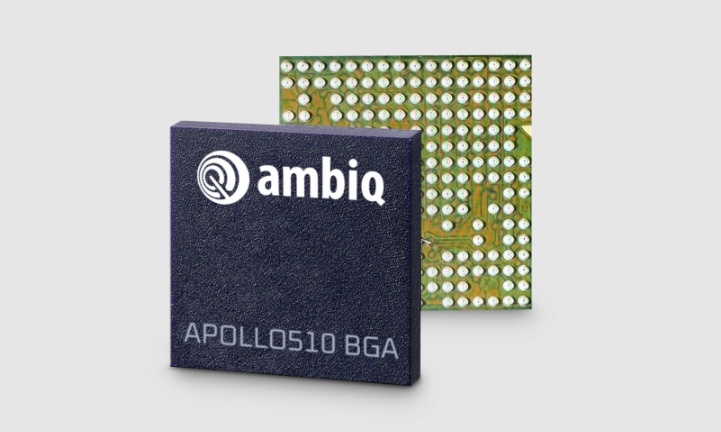
Take the newest Apollo5 MCU (Microcontroller Unit), for example. It's built on the Arm Cortex-M55, and it's seriously impressive. It's 30 times better at saving power and 10 times faster than older versions, and get this – it actually uses less power than those older chips! (EE Times). The Apollo510 version also has some cool features:
It has 4MB of built-in NVM (Non-Volatile Memory), which means it keeps data even when turned off.
Plus, 3.75MB of built-in SRAM (Static Random-Access Memory) for quick access.
There's even a 2.5D GPU (Graphics Processing Unit) to make graphics look great.
It works with MiP displays (Memory-in-Pixel displays), which you usually find in super low-power gadgets.
And for your peace of mind, it has strong security thanks to Ambiq’s secureSPOT platform and Arm TrustZone (EE Times).
Here's a quick look at how Ambiq's soundKIT and Apollo5 stack up:
Ample storage for sophisticated AI models and data directly on the chip.
Technical Differentiators of soundKIT
A key technical differentiator within the soundKIT ecosystem is the inclusion of advanced AI models like Neural Network Acoustic Environment Detection (NNAED). This highly sensitive deep-learning model dynamically identifies subtle acoustic cues to adjust audio processing based on the user's environment, tuning nuances that often exceed human hearing. For developers, this means building more robust and context-aware audio AI applications. Devices can intelligently adapt to varying noise levels and environmental conditions, leading to a superior and more reliable user experience without requiring manual adjustments.
git clone https://github.com/AmbiqAI/soundkit.gitcdsoundkit
./install.shsource.venv/bin/activate#start the soundkit on virtural env
So, you might be wondering, 'What does all this tech talk actually mean for me?' Well, soundKIT isn't just about fancy numbers; it's about making real, useful things happen on tiny devices. It lets people like you build "small AI" solutions that can have a huge impact.
Let's look at some real-life examples where this could be super helpful (Ambiq Documentation):
Smart home gadgets: Picture a smart speaker that only turns on when it hears you speak (that's VAD) or a special wake word (KWS), saving battery.
Wearable tech like smartwatches or glasses: Imagine clearer conversations even in loud places because of noise reduction (SE), or your device knowing your voice for secure access without sending anything to the internet (Speaker ID).
Factory monitoring: Machines in a factory could listen to their own sounds and vibrations to spot problems early, helping predict when they might need fixing.
Car controls: Your voice commands could work perfectly in the car, even with road noise, all thanks to better speech processing.
Health and wellness devices: Think of gadgets that can pick up specific health-related sounds, almost like having a tiny "doctor on your wrist."
This is exactly the kind of "small AI" that experts are excited about – tiny bits of intelligence that make our lives simpler and smarter, showing up in billions of devices all around us (EE Times).
📸 Main Featured Image / OpenGraph Image
Real-World Potential: Beyond the Press Release
For developers, one significant technical challenge soundKIT addresses is bridging the gap between PC-based prototyping and real-world embedded hardware validation. It ensures consistent behavior and reduces development risk by allowing teams to prototype on PC and validate on Ambiq evaluation boards using identical configurations. This means less time debugging discrepancies between development environments and more confidence in the final product's performance.
Beyond the typical smart home and wearable applications, soundKIT opens doors for advanced "hearables." Imagine medical-grade hearing aids or smart earbuds that offer a superior listening experience through real-time speech enhancement and noise reduction, operating with minimal latency and extended battery life. This level of accessibility and clarity, even in noisy environments, represents a significant leap for assistive technologies.
Community Pulse: What Real Users Are Saying
Normally, I'd check out places like Reddit to see what real people are saying, but for this article, I didn't find specific Reddit discussions. Still, we can look at the bigger picture of 'edge AI' – especially what top experts, like Ambiq's CTO, Scott Hanson, are talking about.
Experts often point out that while fancy generative AI gets all the attention, the real exciting part is when we put that same AI into tiny devices that work right where you are, not in the cloud (EE Times). This is where things get practical, but also super hard. These small devices have way fewer resources compared to big cloud servers:
They have 2,000 times less memory to work with.
They need to hit a 3,000 times lower price point.
And they have a 100,000 times smaller power budget! That's a huge difference (EE Times).
This ongoing fight against limited resources is a big theme in edge AI. It's similar to the real-world problems we talked about in ElevenLabs' $11B Valuation when trying to use advanced AI audio in everyday life. And that, my friends, is why soundKIT exists. Ambiq used to just make hardware, but now they offer complete solutions and software, like NeuralSPOT, Voice-on-SPOT, HeartKit, SleepKit, and PhysioKit. This all-in-one approach directly solves these tough problems, making it much simpler for you to put powerful AI into even the tiniest devices (EE Times).
📸 Main Featured Image / OpenGraph Image
Alternative Perspectives & Further Proof: Ambiq's Broader AI Ecosystem
Here's something important: soundKIT isn't just a standalone product. It's a really important part of Ambiq's much bigger world of edge AI tools. This idea of everything working together is what makes it so good.
It works really well with NeuralSPOT, which is Ambiq’s free, open-source AI software kit. This gives you a strong base for building AI.
Ambiq also has Voice-on-SPOT (VoS) for voice features that are always on, showing they're serious about all kinds of audio AI.
And it's not just audio! Ambiq offers other special kits like HeartKit, SleepKit, and PhysioKit. These are ready-to-use AI models and examples you can find on GitHub. It really shows how Ambiq is committed to giving you complete solutions for different types of sensors (Ambiq Documentation).
This whole bigger picture really proves that Ambiq isn't just selling you computer chips. They're giving you a full set of tools to help you build smart, super low-power AI apps.
📸 Main Featured Image / OpenGraph Image
My Final Verdict: Should You Use It?
Okay, so here's my final take: If you're someone who works with tiny AI systems, builds IoT products, or designs hardware, and you're struggling to get always-on audio AI working on super small, low-power devices, then Ambiq's soundKIT is a really strong option for you. It works perfectly with Ambiq's special ultra-low power hardware (like the Apollo5 MCU) and its complete set of software tools (NeuralSPOT, HeliaRT), giving you a solid and easy-to-use platform.
The best part? This kit focuses on audio AI that's fast, efficient, and you can customize it. Its full, step-by-step process directly solves those big problems of limited memory, cost, and power that often mess up edge device projects. It's truly designed to make "small AI" actually work and make a difference.
Ready to jump in? Getting started is super easy:
git clone https://github.com/AmbiqAI/soundkit.git
cd soundkit
./install.sh
source .venv/bin/activate
Once you've done that, you can check out the Quickstart Guide and the Guides section for simple tutorials and how-to's for using it on Ambiq Apollo EVBs. Honestly, Ambiq's soundKIT has the potential to really speed up how we create the next generation of smart, tiny devices, making always-on audio AI a real thing for everyone.
📸 no description available
Frequently Asked Questions
How does soundKIT save so much power on tiny devices?
Ambiq's soundKIT uses their special tech called Subthreshold Power Optimized Technology (SPOT) and the Apollo5 chip. This makes it up to 30 times better at saving power and 10 times faster than older versions. So, it lets AI run all the time, even with very little power.
Can I use soundKIT to make my own unique audio AI models?
Absolutely! soundKIT gives you a complete process for making, teaching, and launching your own real-time audio AI models. While it helps with common things like VAD and KWS, its all-in-one software tools let you customize and build brand new, special audio AI apps.
What's the big difference between Ambiq's HeliaRT and the regular TensorFlow Lite for Microcontrollers?
HeliaRT is a special version of TFLM made just for Ambiq's hardware. It's up to 3 times faster at making AI predictions and supports a special way of handling numbers (int16x8 quantization) that's super important for clear, high-quality audio. Plus, it uses the Apollo510’s special hardware to speed up custom AI tasks, giving it a big performance edge.
Specializing in enterprise AI implementation and ROI analysis. With over 5 years of experience in deploying conversational AI, Yousef provides hands-on insights into what works in the real world.