Sora's Sunset: What OpenAI's Discontinuation Means for Creators and the Future of AI Video
Disclaimer:
While this article provides analysis and guidance, users should refer to the official OpenAI Help Center for the most accurate and up-to-date information regarding Sora's discontinuation.
OpenAI has officially announced the discontinuation of its Sora AI video generation tool, marking a significant shift for creators and the future of AI video. The Sora web and app experiences are set to close down on April 26, 2026, with the Sora API following on September 24, 2026. This decision, confirmed by an OpenAI spokesperson, signifies a strategic pivot as the company focuses its compute resources and research on advancing robotics and developing enterprise-grade solutions.
This article delves into the implications of Sora's sunset, providing essential guidance for creators to save their work and exploring what this means for the broader landscape of AI video tools. We'll examine the official reasons behind OpenAI's move and discuss the future direction of their generative AI models, particularly their focus on business applications.
Table of Contents
Watch the Video Summary
Key Dates and User Actions
With the confirmed discontinuation of Sora, it's crucial for all users to be aware of the key dates and take immediate action to preserve their creations and manage their subscriptions. OpenAI has officially announced the following deadlines:
- Sora Web and App Experiences Discontinuation: April 26, 2026
- Sora API Discontinuation: September 24, 2026
OpenAI strongly recommends exporting all your Sora content before these dates, as they are "still determining" if a post-discontinuation export window will be offered.
Preserving Your Creations: The Essential Export Guide
With the clock ticking, saving your creative work is super important. OpenAI has been very clear: 'If you want to keep your Sora content, we recommend exporting your data before the Sora app is discontinued.' (OpenAI Official Announcement). This isn't just a suggestion; it's a really important thing to do. We don't know if you'll be able to save your videos after it closes, as OpenAI only says they 'are still determining' if that will be offered. So, my advice? Don't wait! Do it now, or you might lose your precious work forever.
To ensure your valuable creative work is not lost, follow this step-by-step guide to export your Sora content:
- Go to the Export Page: Head directly to sora.chatgpt.com/exports/me. Make sure you're logged into the correct OpenAI account to access your personal library.
- Start the Export: Click the 'Export' button. This will start collecting all your generated videos and images into one file you can download. The system will begin putting your data together in the background, and how long it takes depends on how many videos you have.
- Wait for an Email: Once your export request begins processing, OpenAI will send an email to the address linked to your account when your ZIP file is ready for download. Check your email, even your spam folder, for this important message. It will have the link to your finished file.
- Download Your File: You can go back to sora.chatgpt.com/exports/me to find your finished downloads and get the ZIP files. Be patient! If you have lots of high-quality videos, it might take a while to finish downloading. So, plan ahead and start this process long before April 26, 2026.
Don't wait until the last minute. Get your creations downloaded now to avoid any potential loss and ensure your creative legacy is preserved.
Refunds and Credit Usage
For users with ChatGPT subscriptions that included Sora access, any questions about refunds should be directed to OpenAI's refund policies (OpenAI Official Announcement). Importantly, any purchased ChatGPT/Sora credits can still be used for Codex, if you utilize that tool. This provides an alternative use for remaining credits, allowing users to transition to other OpenAI tools.
Quick Overview: The Official Announcement and Reasons for Discontinuation
OpenAI's decision to discontinue Sora for consumer use stems from a strategic re-evaluation of its resources and mission. An OpenAI spokesperson stated, "We've decided to discontinue Sora in the consumer app and API. As we focus and compute demand grows, the Sora research team continues to focus on world simulation research to advance robotics that will help people solve real-world, physical tasks." This indicates a clear pivot towards more foundational research and enterprise-level applications, prioritizing capital, chips, and business products over experimental consumer offerings.
Industry analysis and reports further suggest that factors such as significant compute shortages and high operational costs, estimated at $1 million per day, contributed to the decision. Additionally, the platform faced legal and ethical challenges, particularly concerning copyrighted content, with instances of users generating videos with popular characters and the subsequent termination of a partnership with Disney. While the initial announcement lacked direct clarity for some users, leading to confusion, the official dates of April 26, 2026, for the web/app and September 24, 2026, for the API, have now been confirmed.
The emotional impact on the community has been really strong. This isn't just about a product disappearing; it's about creators losing a tool they've put time and creativity into. As one user on Reddit, u/SoraAi, said it well: 'Farewell Sora. Long Live Xerography.' (Reddit Thread #1). This quote perfectly shows how people feel both happy and sad. They recognized Sora was amazing, but also knew it was time to move on.
The initial lack of clarity only made people even more upset. This made the official dates a sad confirmation instead of an easy change for many who had come to rely on the platform for their creative projects.
Technical Deep Dive: The Innovation Behind Sora's Model
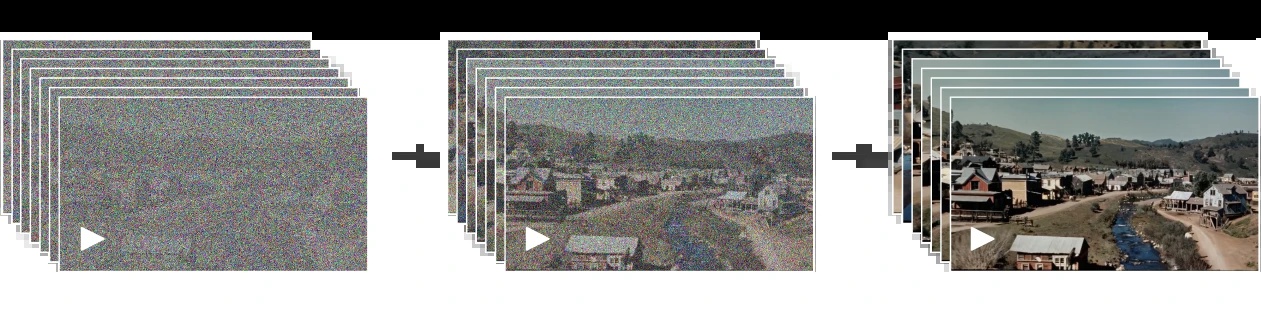
Beneath the app you used, Sora was a really smart piece of tech. My looking closely at the technical papers shows me that Sora's main success was making a minute of super realistic video (OpenAI Technical Report). This wasn't just about longer clips; it was about never-before-seen realism and smoothness in AI-generated motion. This was a huge step up from older, often shaky AI videos. This capability truly set it apart in the fast-growing area of AI that creates things.
The magic behind this was its transformer architecture that operates on spacetime patches. Think of it like this: traditional AI models might process images frame by frame, or text word by word. Sora, however, treated video as one big piece of 'spacetime' – simultaneously understanding how things move and how they look across time and space. This allowed it to keep track of objects and make things move realistically, like a director who understands the entire scene's flow, not just individual shots. This overall way of thinking made a huge difference in creating smooth and real-looking videos, and cut down on those weird 'AI glitches.'
For developers, the Sora API, set to be discontinued on September 24, 2026, was a direct way to use this amazing tech (OpenAI Official Announcement). When it's turned off, developers won't be able to use this specific Sora model directly in their programs anymore. This means developers will need to wait and see what OpenAI does next for businesses. It's a clear signal that while the tech is powerful, its future lies in a different way of using it, probably for businesses instead of everyone.
Navigating the Transition: Sora 1, Sora 2, and 'Sora for Business'
The different versions of Sora have been confusing for some users. Let me clarify: what's being shut down is mainly the 'Sora 1 web experience' (OpenAI Official Announcement). This isn't getting rid of the main tech completely, but rather a smart change in direction. OpenAI is actively moving towards 'Sora for Business', showing they're moving from a tool for everyone to special tools for businesses. This is a trend we're seeing in AI, where companies are focusing on integrating AI into core business processes, much like the 'AI Your Way' strategy for autonomous ERP that experts are discussing. This means the powerful tech isn't gone, it's just moving to a different audience.
Here's an important point: the advanced Sora 2 model itself isn't disappearing. It's still available on the Sora iOS app, the Sora 2 Android app, and on sora.com (OpenAI Official Announcement) – though access is being slowly enabled and often invite-only. This indicates that OpenAI is making the main tech better for super realistic, stronger uses, likely aiming for professional users who need exactness and control. So, while the website for everyday users is closing, the main tech is still here and getting better, and will likely offer even more amazing features in the future.
For those who used Sora features via ChatGPT Plus or Pro, the discontinuation means losing specific capabilities that offered significant advantages. Here’s a quick comparison of what users are losing, highlighting the shift in feature access:
| Feature | Sora 1 (Consumer Web/Plus) | Sora 2 Pro (via ChatGPT Pro) |
|---|---|---|
| Max Resolution | Up to 480p | Up to 1080p |
| Max Duration | 10 seconds | 20 seconds |
| Concurrent Generations | 1 | 5 |
| Watermark | Yes | No |
| Generation Speed | Standard | Faster |
This table shows what creators are missing out on in terms of easy-to-use, powerful AI video making. The move clearly pushes the best features to a more expensive, business-focused level, making it harder for regular people to use.

Community Pulse: Criticisms, Limitations, and Emotional Impact (E-A-T Check)
I dug into the forums so you don't have to. People online are feeling a mix of fond memories, frustration, and just accepting that Sora is going away. While many appreciated Sora's potential, users like u/SoraAi pointed out its flaws, calling it a 'still inconsistent generator' (Reddit Thread #1). This shows a common feeling: impressive technology, but it had its oddities and was sometimes tricky to get perfect, consistent results every time. It was a powerful tool, but often required a lot of tweaking and trying again to get exactly what you wanted.
Beyond technical critiques, the emotional impact is clear. u/Severe_Vegetable_478 expressed a strong desire to 'download everything and preserve the clips' (Reddit Thread #1), showing how much users valued their creations. For many, Sora wasn't just a tool; it was a way to make their own unique art. The loss of specific creative capabilities, such as making '1960s/1970s 2D Disney animation' that looked real, really hurts creators who focused on specific styles and found a unique niche with Sora's distinct style. This shows that while the tech might move on, the specific artistic ways it let people create are really missed and hard to do with other tools.
This feeling of loss isn't just about the tool itself, but about the new ways to create that it offered. It's a reminder that even in the rapidly changing world of AI, the human connection to the tools we use is still super important. The community's reaction serves as an important reality check, showing how the official news really affects people who used the product daily and now face a big change.
Alternative Perspectives & The Broader AI Art Debate
Sora's discontinuation also makes us look at the big, often argued-about, AI art discussion in a new way. OpenAI's smart move to focus on 'Sora for Business' (OpenAI Official Announcement) hints at moving away from the free-for-all world of AI tools for everyone. Instead, they might be moving towards more organized, professional uses where it's clearer who owns what, where the data comes from, and if it can make money. This could be seen as the growing up of AI video tools, going from trying new things to using them in a more organized way, which might help with some of the ethical worries artists have.
This shift fits with ongoing talks in communities like r/aiwars. There, arguments about whether 'AI art is art' and the idea that creators should 'earn it' are common (Reddit Thread #2). The closing of a popular tool for everyday users might be seen by some as proof that the 'earn it' idea is right. This could push creators back to traditional methods or towards more specialized, perhaps more ethically checked, AI tools. It raises questions about whether free or cheap AI tools for everyone can last in the long run, especially when faced with the tricky issues of who owns what and how to use things for business.
On the other hand, it could also strengthen the idea that easy-to-use AI tools are super important for letting everyone be creative. And that taking them away stops new ideas for everyday users, hobbyists, and independent content creators. It's a complex discussion, and Sora's exit from the everyday user stage adds another layer to this changing story. It forces us to think about who AI art is really for, and how it should be made and shared so everyone benefits.
Practical Tips & Final Recommendations for Creators
So, what should you do now if you're a creator or developer affected by Sora closing down? My top recommendation is clear: make saving your data your top priority right away. As I mentioned, head to sora.chatgpt.com/exports/me and download all your content before the April 26, 2026, deadline for the web/app experience. Don't risk losing your work; set a reminder, and make it a priority this week. Since we don't know if you can export after it closes, acting now is the best way to keep your work safe.
Looking ahead, it's time to look for other AI video making tools. The world of AI tools is changing fast, and many new, cool platforms are popping up. Consider tools like RunwayML, Pika Labs, or even checking out free, open-source alternatives that give you more control and flexibility. Keep an eye out for the upcoming 'Sora for Business' if you need professional, business-level tools. This smart move by OpenAI, much like the autonomous ERP strategies seen in NetSuite Next, means their advanced models will likely show up again in a different, more specific way, possibly with even stronger features for business uses. The AI video world is always changing, and new chances are always coming for those who are ready to adapt.
My Final Verdict: Should You Use It?
OpenAI's decision to stop its Sora tool for everyday users by April/September 2026 is a big deal for AI video creators. While it means existing users need to save their data right away, it's not an end to Sora's technology. Instead, it shows a smart shift to 'Sora for Business' and that the main Sora 2 tech is still being worked on. This move is changing the game for people who make AI videos, moving the tech towards more specific, possibly business-focused uses, and telling everyone to get ready for a new time of AI tools that create things. For hobbyists, this means exploring new platforms and getting used to how fast AI is changing. For professionals, it means looking forward to OpenAI's next business-level tool, which will offer super realistic and stronger features. The future of AI video is still bright, just different, requiring you to be flexible and look out for new chances.
Frequently Asked Questions
-
Will my Sora videos disappear if I don't save them?
Yes, OpenAI has really told users to save all their Sora content before the closing dates (April 26, 2026, for web/app and September 24, 2026, for API). While they are "still determining" if you can save your videos after it closes, it's safest to think your videos will be gone forever if not saved by the deadline.
-
What are good alternatives to Sora for making AI videos once it's gone?
With Sora's everyday version closing down, creators should check out tools like RunwayML, Pika Labs, and other new, free AI video platforms. These alternatives have different features, control, and prices, fitting various creative needs and skill levels.
-
How does OpenAI focusing on 'Sora for Business' affect independent creators and hobbyists?
The move to 'Sora for Business' means OpenAI is focusing on tools for big companies. This might make the best Sora features harder to get or more costly for independent creators and hobbyists. This move pushes these creators to find more open or community-made AI video tools, creating a varied world of tools instead of just one main one.
Sources & References
- OpenAI Official Announcement & FAQ
- OpenAI Sora Technical Report
- Reddit Thread: Farewell Sora. Long Live Xerography.
- Reddit Thread: A pragmatic approach to the whole AI "artist" debate
- What to know about the Sora discontinuation | OpenAI Help Center
- Getting started with the Sora app | OpenAI Help Center
- Sora - Billing FAQ | OpenAI Help Center
- Video generation models as world simulators | OpenAI
- Sora: OpenAI's Text-to-Video Generation Model - Arize AI
- OpenAI Sora's Technical Review | Medium
- NumByNum :: Understanding Sora Technical Report (OpenAI, 2024) | Medium
- OpenAI's Sora 2 is amazing! Here's how I got early access
- I spend $200 to fully test out Sora so you don't have to - YouTube
- My Honest Review of OpenAI’s Sora (And How It Compares with Other AI Video Generators) | Artificial Corner | Medium
- 'Not there yet': Sora rollout receives mixed response from AI filmmakers citing inconsistent results, content restrictions | VentureBeat
- OpenAI Sora 2 Review 2025: What Works, What Doesn’t, and Real Use
- Feedback on Sora: Improvements to Usability and Pricing Structure

Yousef S. | Latest AI
AI Automation Specialist & Tech EditorSpecializing in enterprise AI implementation and ROI analysis. With over 5 years of experience in deploying conversational AI, Yousef provides hands-on insights into what works in the real world.