SAP's AI Pricing Revolution: Unpacking Joule, Strategic Shifts, and Customer Implications
Is SAP's 'free' AI a trick for a totally new way of charging, or a real step forward for businesses to work better? I've been looking closely at what SAP is doing, and it's clear they're making a big, smart move. We're going to break down this plan and see how it really affects you, the customer.
Table of Contents
Watch the Video Summary
Quick Overview: SAP's AI Vision Takes Shape
SAP isn't just trying out AI; it's jumping in completely. Their big AI plan is coming together quickly, with Joule, their AI assistant that creates things, leading the way as the main, easy-to-get tool they're offering right now.
Honestly, Joule comes with a 'free' base plan, making it an attractive way for many businesses to get started. But here's the twist: this seemingly generous offer is actually setting the stage for a much bigger, huge change in how SAP charges for its products, as announced by their CEO. My look into this shows a big difference between what you can get now and where SAP plans to go.

Joule: The Free Entry Point to SAP's Generative AI
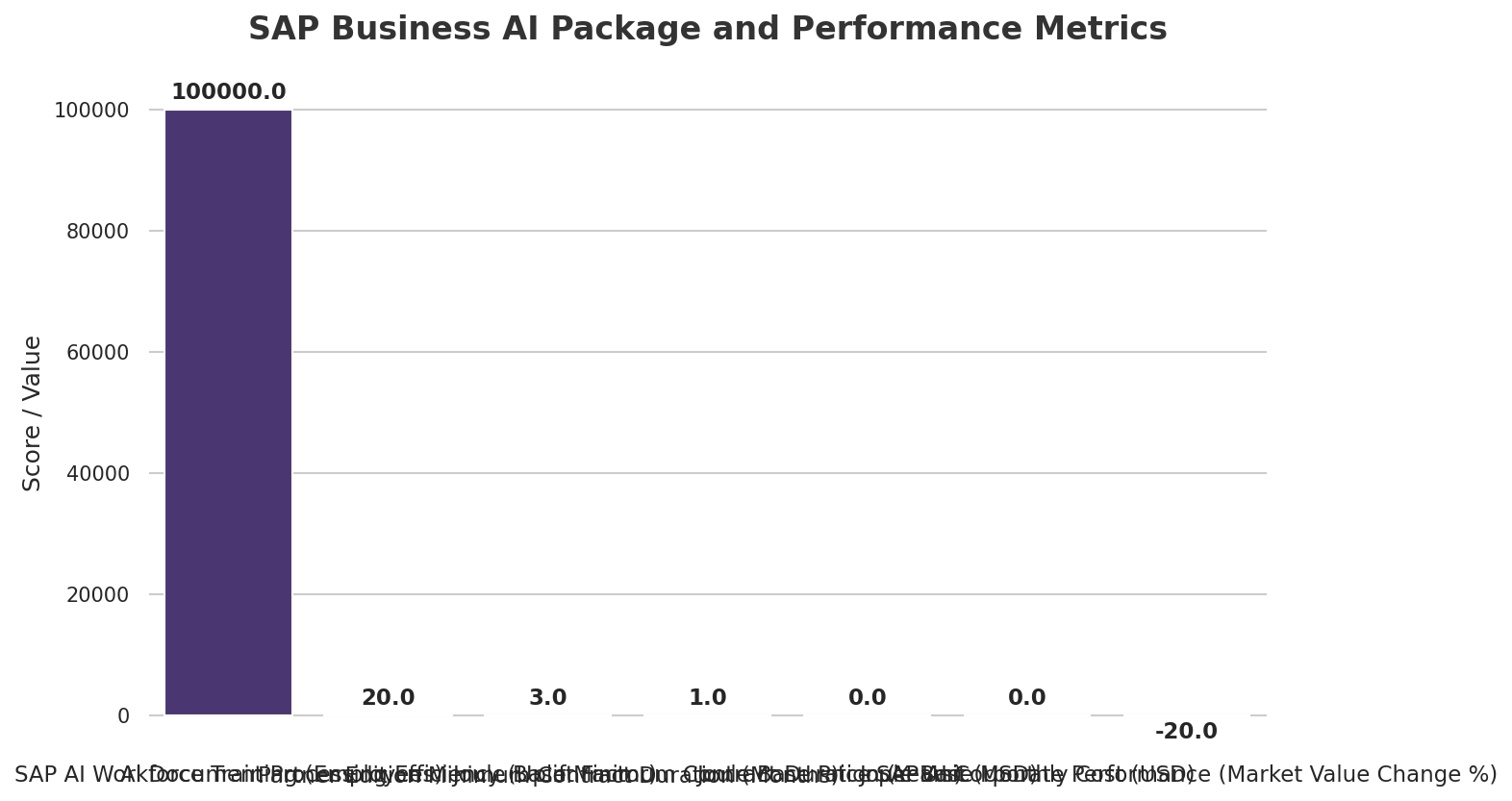
Let's talk about Joule, SAP's AI assistant that creates things. The base plan, priced at USD 0.00 monthly, is designed to be your smart helper inside your SAP programs. But what does 'free' really mean here?
Honestly, I found in the official documents that while the monthly price is zero, you're usually signing up for 1 to 3 years, and it renews automatically. So, it's a commitment, even if you don't pay anything right away.
SAP Business AI: Base vs. Premium Offerings and Specific Packages
SAP differentiates its AI offerings into two main tiers: **Base AI** and **Premium AI**. **Joule Base** falls under Base AI and is included in standard SAP Cloud subscriptions at no additional cost. It provides foundational AI capabilities, such as navigational scenarios, access to SAP Help content, and simple transactional capabilities, allowing users to move within and between SAP applications using natural language. These features are available without limits or additional cost.
In contrast, **Premium AI** includes more advanced and specialized AI services, which are typically powered by AI Units. Joule Premium packages support more complex and scalable use cases and are priced either per user per month (for regularly assigned capabilities) or through consumption-based SAP AI Units for scalable or event-driven scenarios.
Specific **Joule Premium packages** are tailored to different business areas, such as:
- Joule Premium for Financial Management
- Joule Premium for Spend Management
- Joule Premium for Human Capital Management (HCM)
The main things it can do are really useful. You get all Joule's ways to move around, letting you easily move within and between SAP programs just by talking to it. Plus, it remembers what you said. It also gives you access to SAP Help content and how-to guides for RISE with SAP, giving you quick answers without stopping what you're doing.
The best part? It offers easy ways to handle tasks. This means you can make, view, change, or remove business information directly just by chatting with it. This is a huge help for getting things done every day.

Joule's Core Capabilities and Prerequisites for Adoption
Joule's chat-like way of working is designed to make your life easier. Imagine telling your SAP system, "Move this order to the next stage" or "Show me all overdue invoices for customer X," and having it do what you ask right away. It's about talking to your business information just like you talk to a person, making hard tasks feel easy.
But wait, there's a catch. There are some things you need to have before you can use Joule. You'll need a current subscription to an SAP cloud program that works with other SAP tools. When you're signing up, you'll also be asked to pick a main SAP BTP account (that's their tech platform). It's important to pick a main account for all services, not one just for a specific department, because Joule works across everything.
If you don't have a BTP main account yet, don't worry – SAP will give you one for free when you set it up (SAP Official Source). This means getting started is surprisingly easy for you.

The Strategic Pivot: From Subscriptions to AI Usage-Based Pricing
Here’s the deal: while Joule is free for now, SAP's CEO has made a bold announcement that shows a big change is coming. He believes SAP will stop charging based on how many people use it, and instead charge based on how much you use the AI.
Honestly, he argues that in a world where AI helpers do a lot of the work automatically, charging per person doesn't make sense. My analysis shows this directly goes against the whole idea of how software is usually sold, where the number of employees often decides the price. This kind of big change in AI tools is like the 'AI paradox' we talked about before, where old ways of doing things are challenged by new AI ideas. If AI agents are doing the work, the old model simply doesn't fit anymore.

Putting Pricing into Practice: Real-World AI Unit Consumption
To understand how SAP's AI Unit consumption model works in practice, it's helpful to look at specific examples. AI Units are a virtual currency that customers purchase in blocks and then consume across various SAP Business AI features. Each AI capability has a predefined business metric and a conversion rate to AI Units.
For instance, using **Joule for HCM** with 1,000 users might consume 0.5 AI Units per user, totaling 500 AI Units. Another example is **Document Grounding**, where 1,000 records consume 0.005 AI Units per record, totaling 5 AI Units. These examples illustrate how consumption is measured based on specific actions or user metrics within different AI features.
To help businesses forecast their AI Unit needs and manage budgets effectively, SAP provides tools like the **SAP AI Estimator**. This tool allows users to input detailed parameters related to their specific use cases and generate projected estimates for required AI units, costs, and potential savings.
Empowering Customers: SAP's 'Forward-Deployed Engineering' Teams
To help businesses start using this AI, SAP is launching a new way of organizing their teams: special 'on-site engineering' teams, starting in July. These teams are not your typical consultants; they're made up of experts and coders who really know specific industries.
Their job? To work right at your company, building special AI tools just for you, using SAP's platform (Bloomberg Interview). For example, if you want to improve delivery times, these teams would "talk to the truck drivers and really see what they are doing today — and then you design the solution." This hands-on approach is a big effort to make sure AI actually brings real benefits to you.

AI's Dual Impact on SAP: Opportunities and Critical Challenges
Bringing AI into SAP brings an interesting mix: huge chances to change things for the better, but also big problems to solve. This struggle between what AI promises and what it's actually like to use is something we see often, much like our discussion in intelliflo IQ's Market Position, where making the potential a reality was key.
On the good side, we're looking at much better productivity everywhere. Tools like Joule and certified SAP partners like Hypatos.ai, which reported being 20 times more productive by automatically handling documents, are clear examples. AI is changing how businesses work, from predicting when machines need fixing and making sure you have enough stock, to improving HR tasks like reviews and payroll. It's all about making better decisions and giving customers a better experience.
However, the problems are just as important. We're talking about risks with security and following rules. Security experts pointed out weak spots in SAP’s AI system, which could mean customer data might be exposed because the system wasn't separated enough.
And honestly, let's not forget the high costs to set it up and not enough skilled people. These can stop businesses from really using AI to its full potential (ComputerWeekly Analysis).
Fortifying the Foundation: SAP BTP, Partnerships, and Governance
SAP is smartly adding AI into all parts of its system. The SAP Business Technology Platform (BTP) acts as the main base for its AI tools, including machine learning (where computers learn), natural language processing (where computers understand human talk), and computer vision (where computers 'see'). Important AI tools like Joule, AI built right into other products, and the AI Foundation on BTP are all made to offer AI services that can grow with your needs and keep your data safe.
Also, beyond its own platform, SAP is making important partnerships with big tech companies like Microsoft, AWS, Google Cloud, and NVIDIA to improve AI programs that create things. They're also working with Collibra to manage data from start to finish. This is super important for making sure AI is used fairly and follows rules like GDPR and CCPA. This many-sided approach shows SAP is serious about building a strong AI future.

Navigating the Risks: Security, Data Quality, and Costs
When it comes to using AI, the big, unspoken worry for many businesses is risk. The security weak spots found by experts in SAP’s AI system, especially about keeping different customer data separate, are a strong reminder that really good security is super important. As an IT decision-maker, you need to make sure your data is protected, especially when using shared online tools.
Then there's data quality. AI models are very picky about the information they learn from. If your data is wrong or mixed up, your AI will give you bad advice. Investing in good data and making sure it connects well isn't just a good idea; it's a basic must-have for AI to work well.
Finally, the money side of setting up AI, from the tech setup to finding skilled people, can be a big turn-off. It's not just about the software cost; it's about the full cost of having it and what you get back from your investment.

The Competitive Arena: SAP's Position Against Rivals
In the world of business software, SAP isn't working all alone. Main competitors like Microsoft Dynamics 365 and Oracle NetSuite also have their AI plans. Microsoft Dynamics 365 can be built in parts and works really well with all other Microsoft tools. This can be a strength, but it can also make things complicated and might have extra hidden costs if you add other companies' tools.
Oracle NetSuite is strong for medium-sized businesses, but it might not be big or detailed enough for huge companies compared to what SAP offers. SAP's special spot, thanks to its deep knowledge of many industries and a huge number of existing customers, gives it a clear upper hand, especially with its new 'on-site engineering' teams.
However, the shift to charging based on usage will be a key thing that sets it apart. This could either draw in or push away customers based on how much AI they use.
| Feature/Aspect | SAP's AI Strategy (with Joule) | Microsoft Dynamics 365 (with Copilot) | Oracle NetSuite (with AI) |
|---|---|---|---|
| Core AI Offering | Joule (AI assistant that creates things), free base plan, AI built right in. | Copilot (AI assistant that creates things), works really well with Microsoft tools. | AI tools built in for automation, analysis, and insights. |
| Pricing Model Shift | Announced move to AI usage-based pricing, away from charging per user. | Mainly subscription-based with extra costs for Copilot features. | Subscription-based, AI features often bundled or as premium add-ons. |
| Implementation Support | 'On-site engineering' teams for custom AI tools right at your company. | Large network of partners, Microsoft's own consulting services. | Oracle's professional services, partner network. |
| Target Market Strength | Large businesses, deep industry knowledge, huge number of existing customers. | Medium to large businesses, strong for those already using Microsoft. | Medium-sized businesses, growing presence in larger companies. |
| Key Challenges | Security worries (expert report), data quality, managing new usage-based costs. | Complexity with modularity, possible hidden costs with add-ons. | May not be detailed enough for very large businesses, connecting with non-Oracle systems. |

SAP's Internal Transformation: Upskilling for the AI Era
SAP isn't just changing its outside plans; it's changing itself from the inside. I found that there's a big change happening inside the company: SAP's coders are moving from writing regular computer programs to creating AI helpers. This is a huge change in how people work and what tech they use.
To support this, SAP has already retrained 100,000 employees for the AI era (Bloomberg Interview). This effort inside the company shows SAP is really serious about its AI goals and knows its employees need to learn new skills as technology changes. How does this affect a student or a freelancer? It means there will be a growing demand for people who understand AI and can work with these new tools, creating new job opportunities and skill requirements in the tech world.

My Final Advice: Tips for Businesses Using AI
So, what's my final take for businesses figuring out SAP's big AI changes? First, make really strong security and good separation of data your top priority. Don't just assume things are safe; check them yourself.
Second, invest heavily in good data and how it connects; it's the most important first step for any successful AI project. Third, focus on constantly teaching your employees new skills – people are still super important.
Fourth, ask for clear benefits and real examples of how SAP's AI works; don't just accept fuzzy promises. Finally, think carefully about what usage-based pricing models mean for you in the long run. Figure out how much AI you might use and how that could affect your money.
This isn't just a tech upgrade; it's a big strategic change that needs careful planning and checking everything thoroughly.

SAP's move to AI usage-based pricing, led by its free Joule tool and supported by special engineering teams, is a big, though tricky, strategic change. It needs businesses to think carefully about the good parts of automation versus the changing costs and how hard it might be to set up.
Frequently Asked Questions
-
Is SAP's 'free' Joule truly free, or are there hidden costs I should be aware of?
While Joule's base plan is currently priced at USD 0.00 monthly, it typically involves a 1-3 year contract with auto-renewal. More importantly, SAP's CEO has announced a big change to charging based on how much AI you use. This means what you pay in the future will probably depend on how much you use the AI, not just how many people use it.
-
How will SAP's shift to AI usage-based pricing impact my existing subscription costs and budget planning?
This shift could completely change how you plan your money. Instead of predictable fees per user, your costs will depend on how much your AI helpers and users work with SAP's AI tools. It's really important to look at how much AI you might use and talk to SAP to understand what this means for your company's money in the long run.
-
What are the immediate steps my organization should take to prepare for SAP's AI revolution, especially regarding data and security?
Make strong security and keeping different customer data separate your top priority, especially because of past weak spots found in SAP's AI system. At the same time, put a lot of effort into making sure your data is good and connects well, because AI tools only work as well as the information you give them. Finally, start teaching your employees new skills so they can use AI tools well.
Sources & References
- SAP Store: Joule Base Plan
- SAP: Joule Generative AI Copilot
- SAP Business Technology Platform (BTP)
- Bloomberg: SAP CEO Christian Klein on AI Pricing Shift
- ComputerWeekly: How AI Is Shaping SAP’s Future
- Wiz.io: Security Vulnerabilities in SAP AI Core
- Collibra: Partnership with SAP for Data Governance
- Software Packages and Pricing | SAP Business AI
- SAP moving from subscriptions to AI use-based pricing - Techzine Global
- How AI Is Shaping SAP’s Future: Opportunities and Challenges Ahead
- Page Not Found | SAP
- Page Not Found | SAP
- Page Not Found | SAP
- Page not found – Futurum Research
- Page not found – Futurum Research
- Page not found | SAP News Center
- YouTube
- Page not found | SAP News Center
- Page not found | SAP News Center
- 404: Page not found

Yousef S. | Latest AI
AI Automation Specialist & Tech EditorSpecializing in enterprise AI implementation and ROI analysis. With over 5 years of experience in deploying conversational AI, Yousef provides hands-on insights into what works in the real world.