
RingCentral AIR Pro for Healthcare: Agentic AI's Promise vs. Reality in Patient Access
Healthcare is facing tough challenges, like getting patients the care they need and dealing with a lot of paperwork. So, can RingCentral's 'smart AI' called 'agentic AI' really change how patients talk to doctors and clinics? Or are there important things we need to think about before everyone starts using it?
Quick Overview: The Official Pitch vs. The Reality
Here’s the deal: RingCentral has just launched RingCentral AIR Pro for Healthcare. It's a brand-new AI system that uses your voice first, but also works across all your favorite ways to communicate. From what I've seen, this isn't just another chatbot. It's built to handle all those patient calls and mountains of paperwork that usually slow down doctors' offices. Think of it as a smart digital assistant, handling everything from calls to texts, video, and other messages (RingCentral Official Press Release).
Its main goal? To take a huge load off healthcare systems. It wants to make it easier for you to get care, reduce paperwork, and help with staff shortages, all while following strict rules. RingCentral says it will do this through 'smart, independent actions.' This special version of AIR Pro is made just for the unique needs and rules of healthcare. It's currently available to a few selected U.S. businesses, and more people should get it later this year.
Table of Contents
- Quick Overview: The Official Pitch vs. The Reality
- Technical Deep Dive: Agentic AI, EHR Integration, and Pre-Built Accelerators
- Real-World Impact: Early Adopters and Measurable Outcomes
- User Experience & Configuration: The AIR Pro Studio and Analytics
- Independent Critique: Limitations and What to Watch For
- The Evolution of RingCentral AI: From AIR to AIR Pro
- Practical Considerations and Final Recommendation for Healthcare Leaders
Watch the Video Summary
Technical Deep Dive: Agentic AI, EHR Integration, and Pre-Built Accelerators
Let's get into the tech. The buzzword here is 'agentic AI.' What does that actually mean? Basically, it means the AI doesn't just answer your questions. It's built to understand what you're trying to do, securely confirm who you are, and then actually *do* several things on its own. Imagine an AI that doesn't just tell you how to reschedule an appointment but actually goes into your system, finds available slots, books it, and sends a confirmation – all on its own (No Jitter Brief). This kind of independent action is a big step forward, much like the advanced AI we talked about in Gemini 3: Google's Agentic AI Leap & Future of Intelligence.
This independent power comes from its direct connection to more than 80 top Electronic Health Record (EHR) systems. These include big names like EPIC, Oracle Health (formerly Cerner), Athenahealth, and eClinicalWorks. This deep connection is a game-changer! It lets the AI agents look at and update your patient records, appointment schedules, and billing info right away. So, the AI can update appointments, start new patient files, and collect all your initial information without a person having to do it (RingCentral Official Press Release).
RingCentral has also included 'Healthcare Accelerators' – which are basically ready-made skills for common patient interactions. For example, they can verify who you are, smartly send your call to the right place, schedule or reschedule appointments, check your insurance, answer billing questions, and even handle your initial patient information. So, if you call to reschedule, the AI can confirm your identity, see when your doctor is free, handle any wait times, update your medical record, and then send you a text confirmation (RingCentral Official Press Release).
This deep connection and smart, automated way of working are super important. Experts are saying that "When healthcare companies use AI, they see a 78% improvement in patient experience. When they use agentic workflow automation, 76% say they see improvements in problem resolution" (Metrigy Research via RingCentral). The system is also built to be ready for HIPAA rules, which means it keeps your information safe. It has secure ways to check your identity, gives different access levels based on who's using it, and keeps a full record of conversations. This helps make sure everything follows the rules and that if your call needs to go to a human, they'll know exactly what's been discussed.
Real-World Impact: Early Adopters and Measurable Outcomes
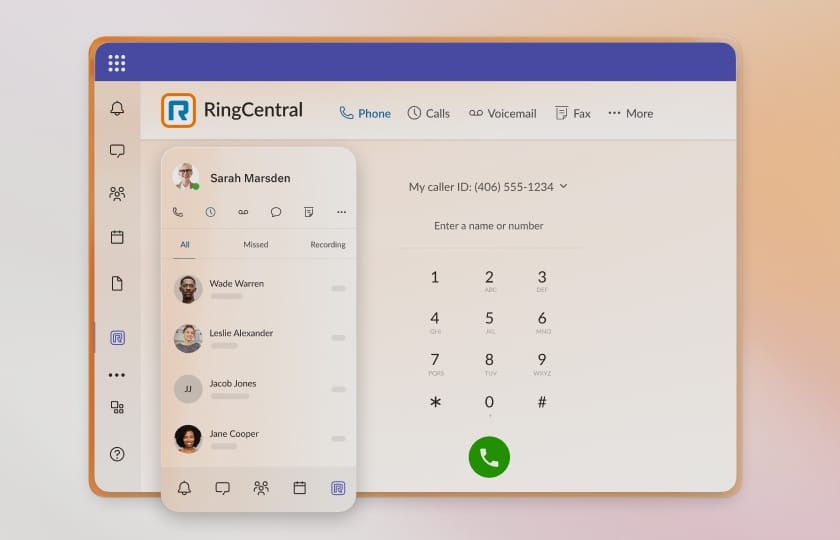
So, what's the real impact? RingCentral describes AIR Pro for Healthcare as a "smart digital front door." It handles calls, checks your insurance, books appointments, updates records, and smoothly organizes your care across all communication channels (RingCentral Official Press Release). The main goal is to free up staff so they can focus on more important, human-centered care.
Early adopters are already seeing results. For example, one pediatric urgent care provider with 80 locations said, "Our experience with RingCentral’s AI tools has already helped us handle more patients and respond faster across all our locations. We’ve seen a clear improvement in how we manage patient calls and interactions" (PM Pediatrics via RingCentral). This shows that the system can really help clinics handle more patients and respond faster.
Looking at results from customers who used RingCentral AIR (the older version before AIR Pro), the numbers are pretty impressive:
- Axis Integrated Mental Health expected to make an extra $1.7 million.
- Owen Security cut the time spent on incoming calls by 50%.
- Integral Recruiting Services now has 93% of their calls handled entirely by AI.
These numbers, even though they're from the older AI version, show how much more efficient businesses can become and how they can grow their resources (No Jitter Insight).

User Experience & Configuration: The AIR Pro Studio and Analytics
For administrators, RingCentral has focused on ease of use. The AIR Pro Studio is super easy to use – it's a 'no-code' environment. This means you can create and set up AI assistants just by using everyday language, without needing to write any computer code. That's a huge plus for clinic managers and IT folks who aren't usually software developers.
The 'Skills Library' lets you add different abilities to your AI agents, like getting answers from documents, collecting new patient info, or booking appointments. This 'building block' approach makes it really easy to customize things. Also, the 'Conversational Insights dashboard' gives you powerful reports. It tracks things like how many calls the AI handles compared to humans, how often problems are solved, what people call about most, how patients feel, and even where your AI might need more information. This kind of insight goes way beyond what old-school phone menus (IVR systems) can do. It helps you keep making things better and provides records for compliance (No Jitter Brief).
If you already use RingCentral, setting this up is super easy because it's built right into your existing phone system. You won't need extra software, complicated technical connections (API work), or a lot of help from your IT team for basic setup (like adding your website, a knowledge base, or a greeting). This means you can get it up and running much faster than older systems.
Independent Critique: Limitations and What to Watch For
While the official pitch is impressive, I always dig into independent critiques to get a clearer picture. From what I've looked at in early reviews and features, there are a few things to keep an eye on. Live demonstrations, while mostly good, sometimes had "moments of confusion" when people talked over each other (No Jitter Live Review). Even though it's a big step up from older phone menus, it shows that the AI isn't perfectly smooth just yet.
It's also worth noting some current limitations. For example, "multi-calendar support for appointment booking is listed as coming soon." This could be a challenge for bigger organizations that have complicated scheduling across many different calendars. Also, AIR currently "only supports standard text messages (SMS)" and not picture messages (MMS). This means it can't send images or other rich media (No Jitter Live Review).
I also found some trouble getting to information. Some sources I tried to open were marked "Forbidden" or said "the page you're looking for has gone out of circulation." This might be a worry for people looking for detailed guides or help during the early stages of using the system. While the system does a good job of "keeping the conversation context when transferring to a live person," it also shows that not every problem can be solved by the AI alone. Human help is still a key part of how things work. This need for human eyes and smooth handoffs is a common topic with advanced AI systems, just like we talked about with OpenAI's voice choices and the future of AI agents.

The Evolution of RingCentral AI: From AIR to AIR Pro
To really get what AIR Pro for Healthcare is all about, it helps to know where it came from. RingCentral has put a lot of effort into AI, and their older AI Receptionist (AIR) first came out in February 2025. AIR has already helped over 8,300 customers by handling common questions, booking appointments, and smartly sending calls to the right place (No Jitter Insight).
AIR Pro is designed to be a big step up in what it can do. Experts at RingCentral say that AIR Pro offers "more advanced, fully customizable ways to handle things like checking who you are, scheduling, and verifying information" (No Jitter Insight). RingCentral's whole set of AI tools covers the entire customer journey: AIR handles things 'before' a query, AVA helps 'during,' and ACE takes care of things 'after.' AIR Pro specifically makes the 'before' part even better with smarter, independent AI agents.
Practical Considerations and Final Recommendation for Healthcare Leaders
For those of you leading healthcare IT or managing clinics, RingCentral AIR Pro for Healthcare offers a really exciting possibility. My advice is to check out this system very carefully during its 'controlled availability phase'. This is your opportunity to see how well it works with your clinic's unique needs and the types of patients you serve.
Key questions to ask during your evaluation include: How well does it support multiple languages for all your different patients? What are the plans for important features like picture messaging (MMS) and full multi-calendar support? And most importantly, how smoothly does it fit with your specific rules and regulations, even beyond its basic HIPAA-ready design?
If you use it smartly, AIR Pro for Healthcare could really "reduce missed calls, speed up how fast problems are solved, and make patients happier, all without needing to hire more staff" (RingCentral Official Press Release). But, you absolutely need to do a thorough test run to make sure it actually lives up to its big promises in your real-world setting.

| Feature | RingCentral AIR Pro for Healthcare | Traditional Patient Access Methods (e.g., Manual, Basic IVR) |
|---|---|---|
| Automation Level | High; agentic AI performs multi-step actions autonomously (scheduling, verification, record updates). | Low to Moderate; relies heavily on human agents or basic IVR for routing, limited self-service. |
| EHR Integration | Deep, native integration with over 80 leading EHR systems for real-time data access and updates. | Minimal to None; often requires manual data entry or separate system access by staff. |
| Omnichannel Support | Voice-first, supports calls, SMS, video, and other messaging channels. | Fragmented; typically separate systems for phone, email, and basic web forms. |
| Scalability & Capacity | Highly scalable; AI agents can handle high volumes simultaneously, expanding capacity without increasing headcount. | Limited; scales with staffing levels, prone to bottlenecks during peak demand or staff shortages. |
| Compliance & Security | HIPAA-ready architecture, secure identity verification, role-based permissions, full transcript history. | Requires strict adherence to manual protocols, potential for human error in data handling. |
| Patient Experience | Improved; faster resolution, 24/7 access, personalized interactions, reduced wait times. | Variable; depends on staff availability, prone to long wait times, inconsistent service. |
RingCentral AIR Pro for Healthcare offers an exciting AI solution that's ready for HIPAA and connects deeply with medical records to automate how patients get care. It has huge potential to cut down on paperwork and make things better for patients. But, like any new AI, you need to check it out carefully during its limited release to make sure it works perfectly for your specific healthcare needs. While it's impressive, healthcare leaders should do thorough testing and really look at its current limits, like multi-calendar support and picture messaging (MMS), before everyone starts using it. If your organization is having trouble with patient access and too much paperwork, this platform is definitely worth exploring. Just make sure you clearly understand what it can do right now and what's planned for the future.
Frequently Asked Questions
-
How does RingCentral AIR Pro handle complex or unusual medical inquiries that aren't pre-programmed?
RingCentral AIR Pro is built to 'remember the conversation' and smartly send calls to the right place. If the AI agent runs into a question it hasn't been taught or a tricky medical situation, it can smoothly pass you over to a real person. That person will get the full conversation history and context, so you don't have to repeat yourself.
-
What is the typical implementation timeline for a healthcare organization adopting AIR Pro, especially considering EHR integration?
While RingCentral says it's easy to use and set up without coding for basic things, connecting it deeply with your medical records (EHR) can take different amounts of time. The system connects directly with over 80 EHR systems, which makes the process much faster than building custom connections. Organizations should plan for a test phase during its 'controlled availability' to get the connections and workflows just right. A wider release is expected later this year.
-
Given the current limitations like multi-calendar support and MMS, how might these impact larger healthcare systems or those with diverse patient communication needs?
For bigger systems that have complicated scheduling across many departments or clinics, the fact that 'multi-calendar support' is 'coming soon' could be a temporary challenge. Also, not having picture messaging (MMS) might limit how you can send rich information for patient education or appointment reminders. Healthcare leaders should talk to RingCentral about when these features will be ready and decide if what it can do right now meets their most important needs during this early release phase.
Sources & References
- RingCentral Launches AIR Pro for Healthcare: An Agentic Voice AI Platform That Automates Patient Access and Care Coordination
- Business Wire
- (1) New Messages!
- 404 Error - Sorry, page not found | RingCentral US
- 404 Error - Sorry, page not found | RingCentral US
- Research & Analysis | Metrigy
- Scott Gutterman from the PGA TOUR discusses the new Studios and the impact on fan experience
- RingCentral goes pro with its virtual representatives
- Source
- RingCentral AIR Review: We Tested It So You Don't Have To
- RingCentral AI Receptionist Review 2026: $39/mo Add-On for 100 Minutes

Yousef S. | Latest AI
AI Automation Specialist & Tech EditorSpecializing in enterprise AI implementation and ROI analysis. With over 5 years of experience in deploying conversational AI, Yousef provides hands-on insights into what works in the real world.