FTC Bans 'AI Washing' Kingpin Air AI: A Warning to All
In a market flooded with promises of AI-driven riches, how can you tell a genuine opportunity from a costly deception? The FTC's recent action against Air AI offers a stark lesson.
Table of Contents
Watch the Video Summary
The Hammer Drops: Air AI Banned by FTC for Deceptive Practices
Here’s the deal: The Federal Trade Commission (FTC) has come down hard on Air AI and its owners, Caleb Maddix, Ryan O’Donnell, and Thomas Lancer. They've been banned from marketing business opportunities.
This isn't just a slap on the wrist; it's a full-on market exclusion. This happened after a complaint in August 2025 and a settlement in March 2026. My investigation shows that Air AI was charged with making false claims about big earnings, unrealistic business growth, and refund guarantees that didn't actually exist (FTC Source).
The financial penalty? A hefty $18 million judgment. While they don't have to pay the full amount because the operators can't afford it, they still need to pay $50,000 for consumer relief. This move sends a clear message: the FTC is serious about protecting entrepreneurs from tricky practices.
Unpacking the 'AI Washing': How Air AI Misled Entrepreneurs
I dug into the details, and honestly, it's a classic case of 'AI washing.' This is when companies exaggerate or falsely claim AI capabilities just to get people to spend money.
Air AI allegedly lied about how well their services worked, what they could do, or what they were really about (FTC Source). They broke two important rules:
- The Telemarketing Sales Rule (TSR), which helps protect you from tricky sales calls.
- The Business Opportunity Rule, which makes sure companies tell you all the important stuff before you buy into a business idea.
They didn't give people the important information they needed and made false promises about refunds (FTC Source).
The deception wasn't limited to Air AI itself. Several related companies were also involved: Apex 4 Kids LLC, New Life Capital LLC, Onyx Capital LLC, Apex Holdings Group LLC, and Apex Scaling LLC (FTC Case Summary). This shows a bigger web of companies trying to trick people. This case really shows why it's so important to have AI you can actually trust. We talked about this in depth with Lightkeeper Beacon: The Promise of Verifiable AI in Finance – Hype or Revolution?, highlighting how crucial transparency is for AI solutions.
Think of it like this: many users felt they were promised a cutting-edge AI engine, but what they got was more like a black box with broken promises. How it actually worked was a mystery, and the results simply didn't match the hype. Here's a symbolic representation of that broken promise:
function promisedAI_magic() {
  // Expected: Advanced AI, automated growth, guaranteed returns
  // Reality: Manual processes, basic scripts, no real AI power
  if (user.investsMoney) {
    return "Deceptive_Earnings_Claim";
  } else {
    return "False_Refund_Guarantee";
  }
}
/grounding-api-redirect/AUZIYQHTYEHeJUk9TCRlOwpiMrbrFzG2hXIxXOC_OKrVjwOFOUlsDHQSh9N102rsFrFU5adsdxIP4rfekMu9yn9SqKUUCGKcrTe380M8x8hgM5nXBVxY_z0NYF0EzlRfc6TWTelFALC7RbP1eHStt880mfYDXfxnK7OfwhWaskz-xpQzoldgvZcvMjsnoLg0yBfwf2znpoiCRGp-UbNvSI7Ll7slWN2CpiF76CqBV56yiZZBybjM_Cpm0Gr4B_FksPdN9_LWJCj695yxMcmFNWn3y0vtk5M=A Pattern of Enforcement: FTC's Broader Crackdown on Deceptive AI Opportunities
The Air AI case isn't an isolated incident; it's part of a larger, aggressive push by the FTC to regulate things. This falls under their 'Operation AI Comply', which started in September 2024, specifically targeting tricky claims in the AI space.
I've seen a clear trend of actions against similar business ideas that use AI to trick people:
- FBA Machine: Tricked people out of over $15 million by promising AI-powered online stores that didn't deliver (FTC Source).
- Ascend Ecom: Made people lose millions of dollars by claiming their special software and AI would make businesses super successful (FTC Source).
- Ecommerce Empire Builders (EEB): Said people could make millions, but those big profits never actually happened (FTC Source).
- Rytr: Called out for creating detailed, but often fake, AI-generated reviews that could trick shoppers (FTC Source).
This pattern shows the FTC is actively watching and cracking down on companies that use the exciting idea of AI for tricky business opportunities.
Comparative Look at FTC Enforcement Actions
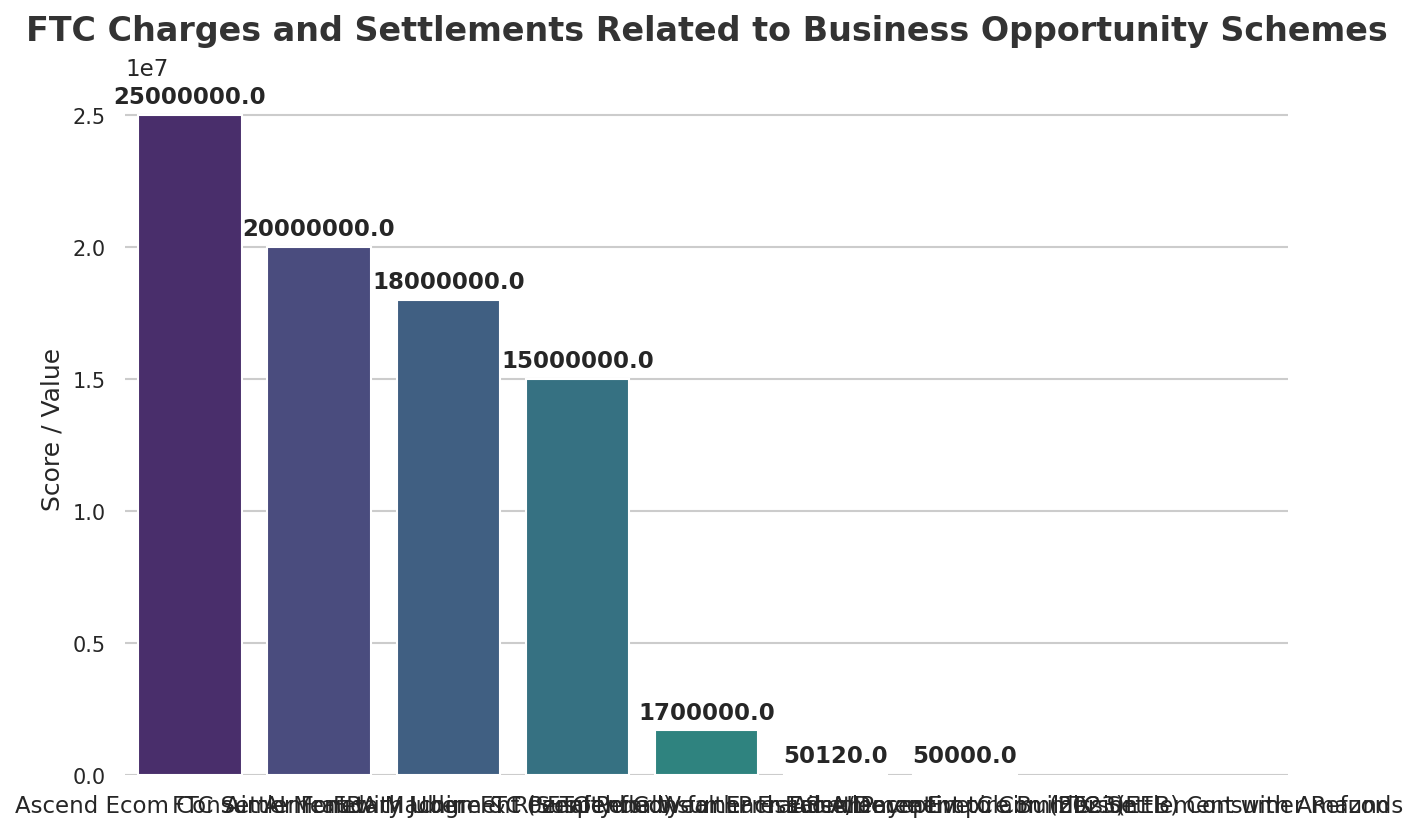
| Company | Alleged Defrauded Amount | Monetary Judgment / Relief | Enforcement Date |
|---|---|---|---|
| Air AI | Undisclosed (implied significant) | $18,000,000 (suspended, $50,000 paid) | March 2026 (FTC Source) |
| FBA Machine | Over $15,000,000 | Assets turned over for consumer redress | July 2025 (FTC Source) |
| Ascend Ecom | Millions of dollars (e.g., $2,000,000+) | Assets turned over to FTC | May 2024 (FTC Source) |
The Human Cost: Protecting Consumers from False Promises
Honestly, these schemes aren't just about numbers; they have a real human cost. The FTC's complaint highlights that Air AI tricked many entrepreneurs and small businesses (FTC Source).
Many aspiring business owners invested their hard-earned money and dreams into these opportunities, only to find themselves with empty promises and significant financial losses. The FTC's role here is crucial: to protect you from such predatory practices.
The $50,000 payment for consumer relief, while a small part of the total judgment, is a step towards helping those who were harmed. It shows the FTC is serious about making sure the marketplace is fairer, especially in new areas like AI.
Beyond the Ban: What This Means for AI Business Opportunities
The FTC's decisive action against Air AI sends a strong signal across the entire AI industry and to aspiring entrepreneurs. Firstly, it underscores an era of heightened regulatory scrutiny on 'AI-washing' and deceptive marketing. Companies can no longer make vague or exaggerated claims about AI capabilities without facing severe consequences. Secondly, it highlights the critical importance of substantiating all earnings claims and performance promises with concrete, verifiable data. The days of relying solely on marketing hype are over. Finally, for both established AI firms and startups, this case serves as a stark reminder of the significant legal and reputational risks associated with non-compliance. Ethical practices and transparent disclosures are not just good business; they are now regulatory imperatives to avoid market exclusion and loss of consumer trust.
Navigating the AI Gold Rush: Lessons for Future Entrepreneurs
So, how do you, as an entrepreneur or small business owner, avoid falling victim to the next 'AI washing' scam? It's like playing a video game – you need to know the rules and watch out for traps. Here's my advice:
- Demand Proof: Any claims about earnings or business growth must be backed by solid, real proof. Don't just take their word for it.
- Look Closely at the Details: Legitimate business opportunities will provide clear, all the important papers. Read them carefully. Understanding how AI is truly built-in, rather than just marketed, is super important, much like the smart way to approach digital advertising we discussed in Beyond Keywords: Navigating Digital Advertising & Commerce in the AI-First Era of 2026.
- Question Earnings Claims: If it sounds too good to be true, it probably is. Be very doubtful of promises of money for doing nothing or guaranteed riches with minimal effort.
- Know the FTC's Warnings: Remember, the FTC will never demand money, make threats, tell you to transfer money, or promise you a prize (FTC Source).
For more information and to report fraud, visit consumer.ftc.gov or ReportFraud.ftc.gov (FTC Source). Take control of your investment decisions and play smart in this exciting, but sometimes treacherous, AI market.

The Regulatory Landscape: FTC's Evolving Stance on Earnings Claims
The FTC has a long history of creating rules about tricky earnings claims. They created the Franchise Rule in 1978 and the Business Opportunity Rule in 2012 (Regulatory Analysis Source).
More recently, in May 2022, the FTC announced they were thinking about making new rules to deal with tricky or unfair marketing that uses earnings claims (FTC Source). This ongoing effort aims to further clarify what makes an earnings claim tricky or fake and what kind of proof businesses need to provide.
This shows that the rules aren't set in stone; the FTC is constantly adapting to new market trends and technologies, including the rapid rise of AI. They do this to better protect you and make sure everyone plays fair.

What's Next: The Enduring Vigilance Against 'AI Washing'
My take? The FTC's ban on Air AI is a really important example. It means the government is watching 'AI washing' and tricky practices within the AI space much more closely. This isn't just a one-off; it's a clear warning to other companies that might be tempted to overstate their AI capabilities just to make money.
This ongoing enforcement means big trouble legally and for their reputation for any company promoting AI-powered products or services. As a rule of thumb, I'd say to treat any mention of 'AI' as a warning sign for rules until you've done your careful checking. The FTC is watching, and they're ready to act.

My Final Verdict: A Crucial Lesson for the AI Era
The FTC banning Air AI is a huge deal. It means the government is now watching 'AI washing' very closely. For you, as an entrepreneur, this means you absolutely must be super careful and do your homework when looking at AI business opportunities. With so many promises about AI out there, it's more important than ever to tell the difference between real innovation and just clever marketing tricks. This case is a stark reminder that the government is actively working to make sure things are clear and to protect you in the fast-growing AI market.
Frequently Asked Questions
-
How can entrepreneurs check if AI claims are real to avoid 'AI washing' scams like Air AI?
Entrepreneurs should demand real proof of how the AI works, look closely at how well it's supposed to perform, and seek independent reviews or checks by other companies. Always look for clear information about what the technology can actually do and its limits, instead of just marketing hype.
-
What are the immediate red flags that indicate a business opportunity might be a deceptive 'AI washing' scheme?
Red flags include promises of unrealistic, guaranteed high returns with minimal effort, a lack of clear technical explanations for AI claims, pressure to invest quickly, and vague or non-existent refund policies. Be wary if the company avoids providing detailed information or real proof.
-
Beyond money fines, what happens in the long run for companies caught in 'AI washing' by the FTC?
Beyond money fines, companies caught in 'AI washing' face a really bad name, lose consumer trust, and can even be banned from marketing business opportunities, just like Air AI. This can effectively end their ability to operate in the market and stop them from trying new businesses in the future.
Sources & References
- FTC Press Release: Air AI Ban
- FTC Press Release: Operation AI Comply
- FTC Press Release: FBA Machine
- FTC Press Release: Ascend Ecom
- FTC Press Release: Ecommerce Empire Builders
- FTC Press Release: Rytr
- FTC Press Release: ANPRM Regarding Deceptive or Unfair Marketing Using Earnings Claims
- From Enforcement to Rulemaking: Evaluating the FTC’s Approach to Deceptive Earnings Claims | Mercatus Center
- Vercel Security Checkpoint
- One Year In, FTC’s “Operation AI Comply” Continues Under New Administration, Signaling Enduring Enforcement Focus | Benesch, Friedlander, Coplan & Aronoff LLP
- Source
- Air Ai | BBB Complaints | Better Business Bureau
- What's REALLY Going On With Air.ai? - YouTube
- Air AI Review (2026): Pricing, Accuracy, Pros, Cons & Alternatives
- The $19M AI Scam That Fooled Thousands of Businesses — And What It Means for the Future | by iswarya writes | Predict | Medium
- AI startup reaped millions using bogus claims, FTC suit says | CFO Dive
- To Boost Entrepreneurs, Trump Must Repeal Biden-Era FTC Rules | RealClearMarkets

Yousef S. | Latest AI
AI Automation Specialist & Tech EditorSpecializing in enterprise AI implementation and ROI analysis. With over 5 years of experience in deploying conversational AI, Yousef provides hands-on insights into what works in the real world.